


Funworld
Celebrating 25 Years of Universal Studios Japan
Park creates a name for itself in competitive Asian market
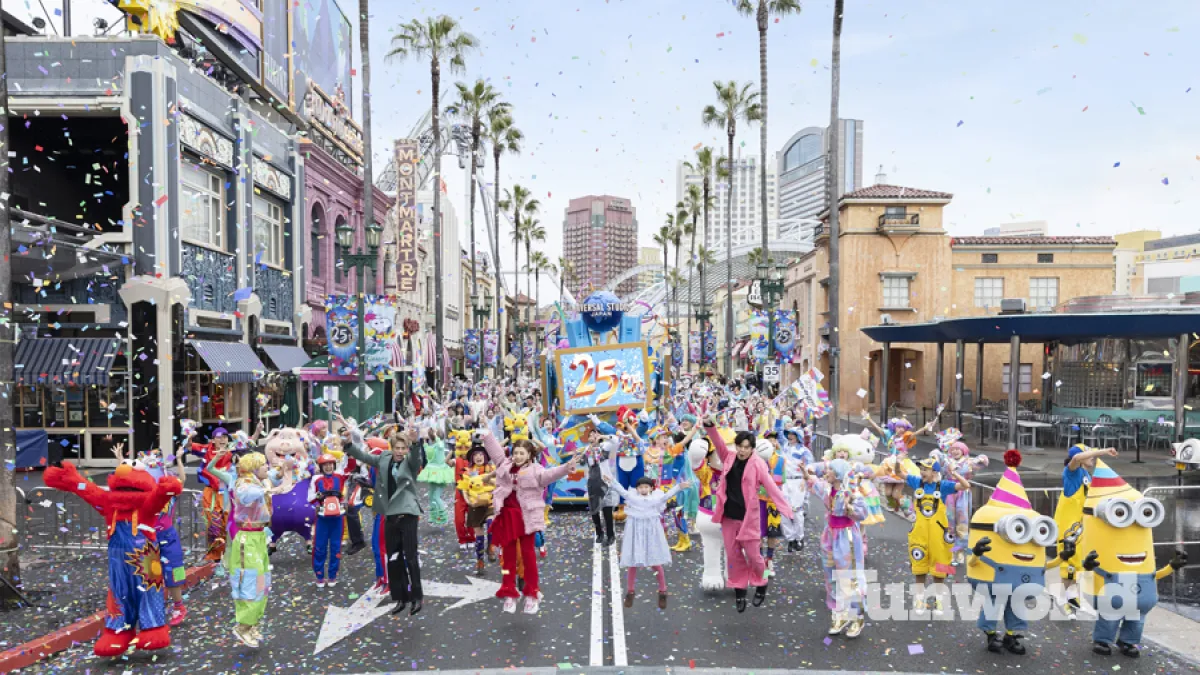
THE PHRASE NO LIMIT IS MORE THAN A SLOGAN at Universal Studios Japan—it’s a mantra. At age 25, Universal Studios Japan (USJ) is just getting started. As one of the world’s best-attended theme parks, the property has developed a reputation for overtly friendly employees and installing significant capital investments from parent company Universal Destinations & Experiences first (Super Nintendo World, Donkey Kong Country, and the upcoming Pokémon attraction), while maintaining an aura all its own.
“Being trusted to launch new experiences first creates a positive cycle of pride and momentum,” shares Hironobu Kurokawa, chief marketing officer at USJ.
In April 2025 at IAAPA Honors, USJ won the coveted Liseberg Applause Award—the attractions industry’s oldest and most prestigious award.
“It’s a world class park in terms of leadership, quality, service, innovation, and application of technology. But what makes it really stand out is the fact that the park in many ways is.
Creating Stardust
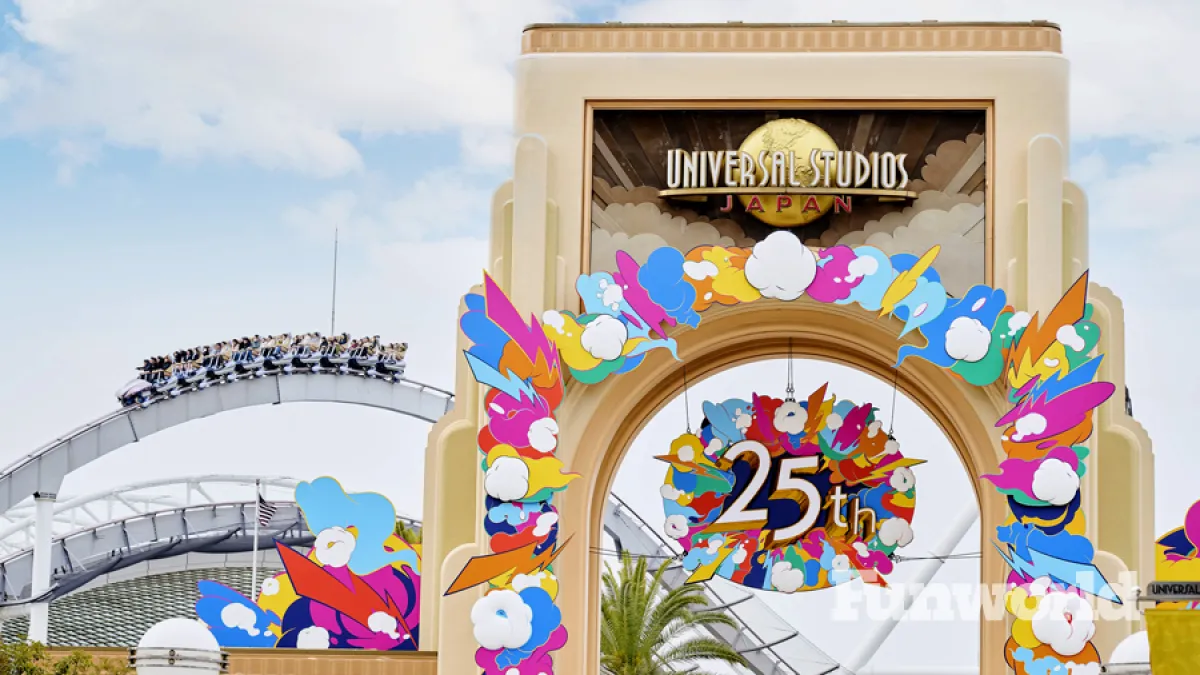
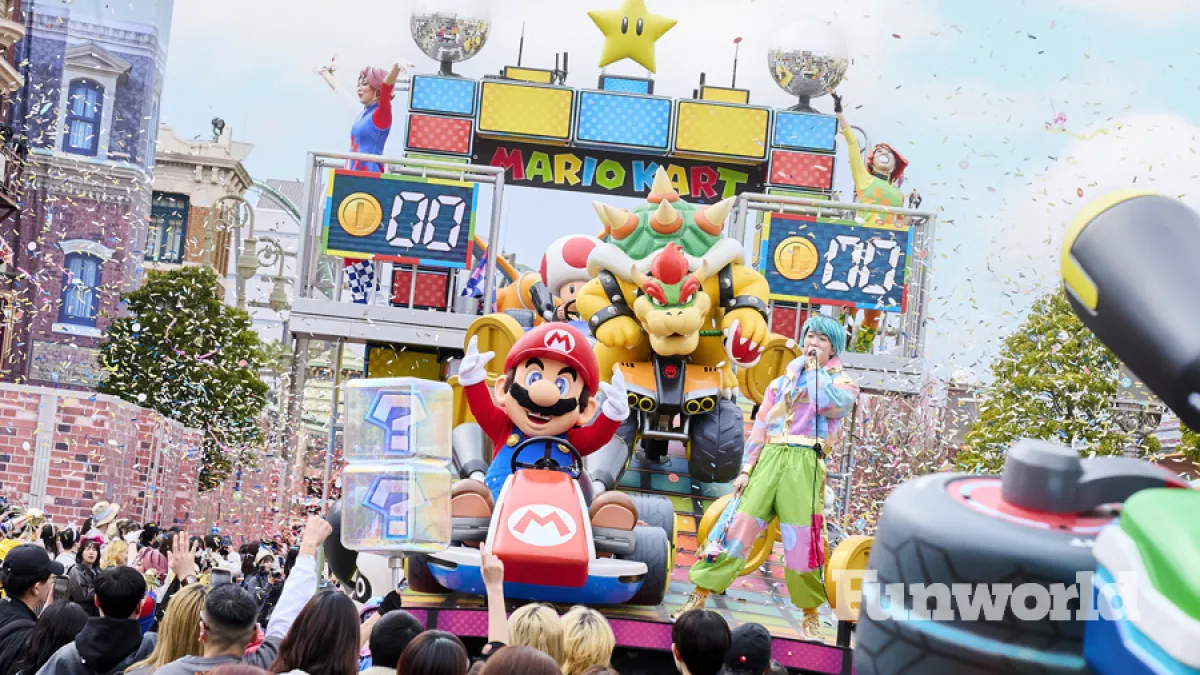
The 25th anniversary décor placed around USJ’s iconic studio arch is bright and bold, foreshadowing in nature of the way the crew (USJ’s name for its 15,000 members of staff) proactively interacts with guests. Crew members are insistent on waving—traditionally using two hands—for everything from saying hello, to arriving and leaving.
“Crew is our number one attraction,” Kurokawa shares. The friendly exoskeleton is a visual representation of a framework leading to operational excellence.
Kurokawa says it initiates with a guest‑first mindset. Every decision begins by understanding what guests want—and expect. To gather this, the park employs extensive quantitative and qualitative research, third‑party market studies, and constant feedback from front‑line crew members.
“We speak with crew members who are in touch with our guests to confirm what kinds of experiences they are seeking,” he affirms.
Next, Kurokawa says just meeting expectations is not enough. Thus, USJ focuses on fully immersive experiences that transport guests into the worlds of the park’s ample stable of characters, from Universal IP to Sesame Street and Peanuts, like Snoopy. “When guests look around and think, ‘Wow, this is amazing,’ we consider that true immersion,” says Kurokawa.
In addition, the operator believes it’s essential to keep the experience fresh. This is a theme park that’s not afraid to evolve. Older attractions such as Backdraft, Back to the Future The Ride, The Amazing Adventures of Spiderman, Terminator 2 3D, Shrek 4D, and The ET Adventure were retired in favor of new experiences, some unique to the region and characters that are wholly Japanese.
“To encourage repeat visits, we must continuously deliver new updates,” Kurokawa confirms to Funworld.
Beyond major attraction launches, the park operates a “five‑season” model, with special events and menus for the cooler months, spring, summer, Halloween, and holiday season. Kurokawa says with 80% of guests are classified as repeat visitors, with frequent new offerings proving critical when building long‑term loyalty.
Finally, the No Limit spirit fosters a culture of challenge, collaboration, and integration across all departments. “Sometimes around a hundred people come together to ensure everything is aligned, integrated, and immersive,” he says.
Oshi-Katsu Retail That’s Authentically Japanese
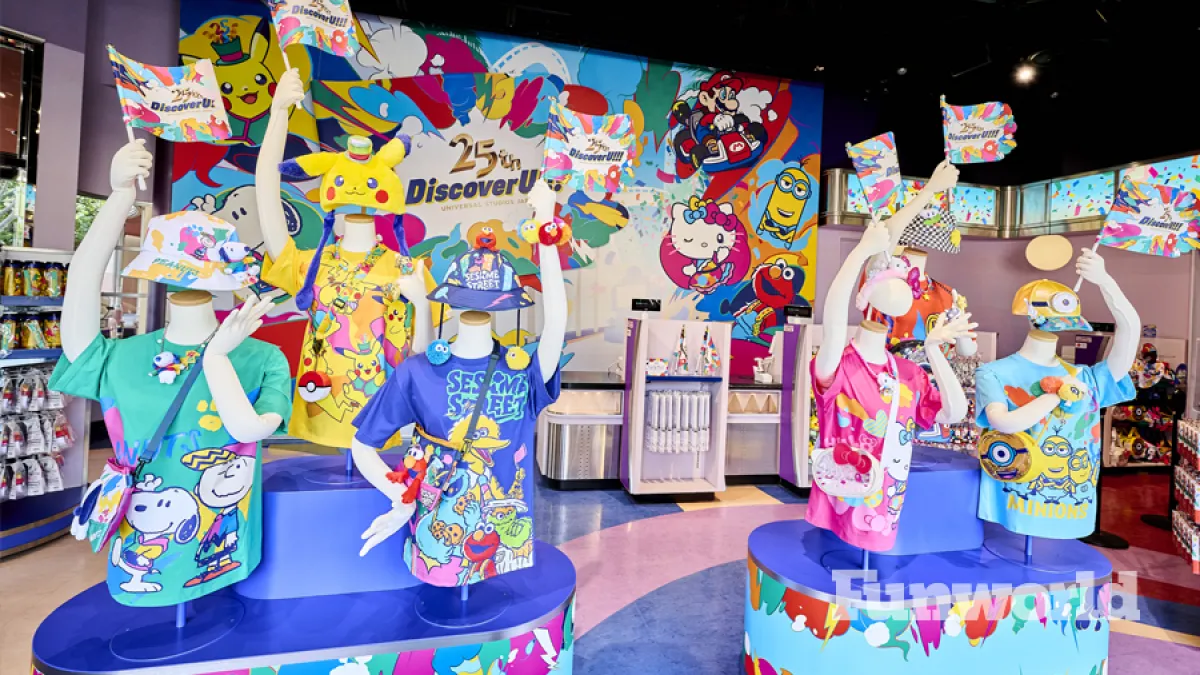
During Funworld’s visit in late winter, more than half of the park guests in attendance had adorned their noggins with headbands sporting the park’s characters. Snoopy, Woody Woodpecker, Minions, and even a shark from the classic Jaws ride—complete with cloth teeth—stood ready to appear as if they were trying to nibble on a guest’s cranium. Call it oshi-katsu, which means wearing one’s favorite character.
“We define merchandise enjoyed by wearing it inside the park as ‘in-park merchandise,’ and initially launched dedicated projects to strengthen this category,” says a park merchandise manager.
The act of “dressing the part” while visiting is prevalent for guests of all gender identities.
“Taking headwear as an example— beyond the desire to fully embody a character or coordinate matching items within a group—we design products for mainly targeting young females who desire to look as cute as possible in a pictures that they take for social media,” the merchandise manager says.
For students and inbound tourists, USJ offer’s unique items with playful gimmicks. For fans of USJ’s IPs, the park has designed items that allow for customization. For example, recently, the park introduced shoulder-sitting plush. “In-park merchandise has now become a core park-exclusive product category and continues to evolve,” the manager says. The park has also seen an increase in demand for plush keychains to attach to purses and backpacks.
The development process begins when a team of 20 merchandise designers explore the worldviews of characters and their stories, keeping in mind a theme park is a unique environment all its own. Thus the team finds value in creating a surprise—making guests think, “I didn’t see that coming.”
Additionally, USJ offers coordinated product assortments, such as matching headbands and T-shirts, or earrings and bags. Sharing outfit ideas comes alive through in-store displays. “This allows us to communicate the fun of coordinating in-park merchandise to our guests,” the merchandise manager says.
Another trend includes seal collecting, where guests gather stickers to decorate items and trade with friends. With approximately 92% of Japan’s 22 million citizens living in urban areas (Osaka is home to roughly 2.7 million), space constraints define daily life. Yet, gift giving remains a part of highly structured culture in Japan, displaying respect for relationships and social harmony. Thus, several retail locations along the park’s Hollywood Boulevard exclusively feature decorative tins and lavishly designed canisters holding prepackaged cookies and baked treats.
“We think of our merchandise as attractions that fit in the palm of your hand,” says merchandise planners.
Elevating Food and Beverage
The park’s F&B managers use food as an opportunity to continue unique storytelling using flavors as characters.
“We focus on quality that appeals to all five senses—not only taste, but also texture, aroma, and visual presentation. By doing so, we are able to deliver a dining experience that is truly unique to Universal Studios Japan,” says a representative from the park’s F&B team.
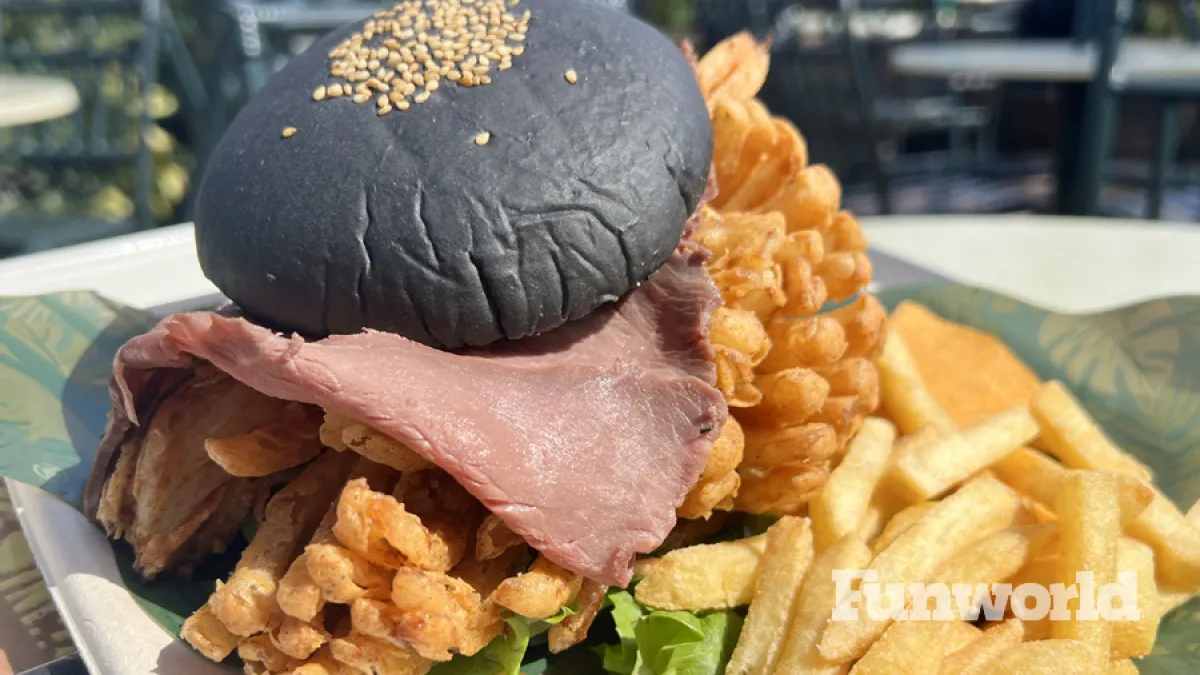
In the Jurassic Park section, the TRex GarlicTomato Beef Burger Meal is a smorgasbord resting between a black bun. A beef patty joins shaved roast beef and fried onion blossom, all smothered in a spicy garlic tomato sauce. Accompanying the dish are french fries and nacho chips. The behemoth meal retails for JPY ¥4,500. To entice guests, photos of the meal are positioned prominently on signage found inside the land.
New meals are introduced on a seasonal basis, with chefs browsing social media to stay ahead of trends, along with dining at restaurants outside the park. The process of launching a new menu item begins in the park’s test kitchen, followed by creating a proposal based on a concept and the story chefs hope to tell.
“From there, our chefs develop the menu, and the item goes through internal approval within the food department as well as licensor approvals before moving into development,” says a source in the food and beverage department.
Just as important as quick service dining locations, USJ’s food offerings are found at strategically placed carts and kiosks. The park’s popcorn program fuses Japan’s love of popcorn and novelty merchandise. The park currently offers four different flavors of popcorn—each distributed in a different location. When married with a popcorn bucket that doubles as art—such as the Super Star Popcorn Bucket (which lights up and comes with a shoulder strap, similar to a purse)—the bucket becomes a fashion accessory. Other examples include the Nezuko Demon Slayer Popcorn bucket and the Godzilla x Evangelion popcorn bucket, both harnessing a popular IP with a highly detailed character. USJ’s best-selling flavor is caramel. By blending sweet-and-savory cravings with gourmet artisanal flavors, USJ has created a status symbol. The reigning No. 2 walkable food item is turkey legs.
What can other facilities learn from this award-winning gem in Japan?
“Know your audience. Be proud of your IP, but don’t be afraid to adapt it to a regional context. Something unique and magical can be created in combining cultures and traditions,” affirms Andersen.

Follow IAAPA for news and event announcements in your favorite social media apps
Connect with the Real Stories Behind the Fun
Follow our social media for authentic stories, special moments, and behind-the-scenes looks from the attractions world.


