


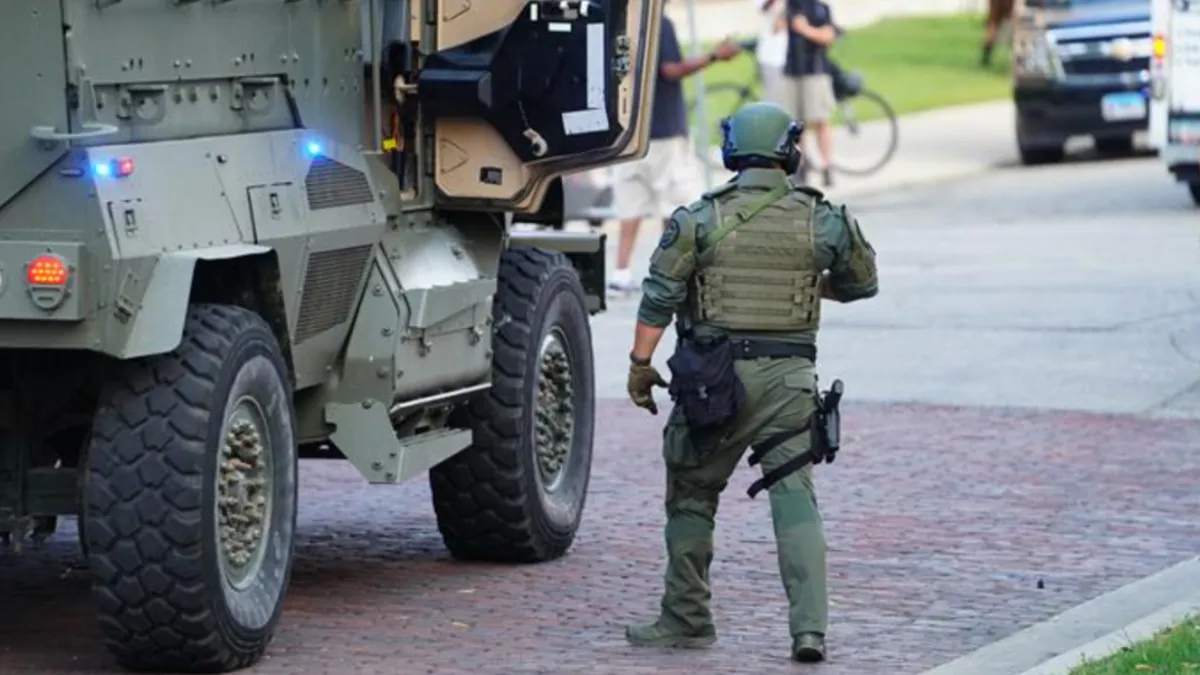
In spring 2026, several zoos in North America shuttered for a day when operators were the target of threats. In July, a Florida water park was evacuated after a caller phoned in a threat. Time after time, after a proactive response and thorough inspection from law enforcement, no immediate threat was discovered, and the venue reopened in the days that followed.
“Swatting” is defined by U.S. Homeland Security as the malicious act of making a false emergency call to police to report a severe, ongoing crisis—such as a bomb threat or active shooter. Often, the caller will aim to trick emergency dispatchers into sending heavily armed first responders to an unsuspecting victim's location.
What should an attraction operator do when becoming victim to swatting?
“The initial response is critical,” shares the Orange County Sherrif’s Office (OCSO) in central Florida. “Affected attractions should treat every threat as credible until it has been assessed by law enforcement.”
Welcome Law Enforcement Early
The best practice for managing a swatting threat is to prepare before a critical moment arrives.
Prior preparation is the single most effective way to improve an attraction’s response to swatting calls and other threats.
This begins with establishing a strong relationship with local law enforcement before a crisis arises. Whether an amusement park, science center, water park, museum, zoo, aquarium, and family entertainment center, the attraction should develop—and maintain—a strong working relationship with its local law enforcement and other authorities having jurisdiction.
Best practices include:
• Inviting emergency personnel to visit a facility on a regular basis for a tour and conversation.
• Operations, food, and merchandise managers should show authorities evacuation routes, designate where first responders may park their vehicles, participate in tabletop exercises, and discuss further emergency response drills. These can be held before opening for the day or during the off-season.
• Leaders and designers should engage with first responders during the planning stage of major expansions or modifications.
• Offer opportunities for law enforcement to conduct their own training exercises, for example, inside an FEC’s laser tag arena or a water park when appropriate.
These activities can familiarize law enforcement with a facility’s access routes, operational procedures, and personnel. Pre-emergency visits establish trust and credibility before an emergency occurs.
Develop an Emergency Action Plan
Attractions should develop a comprehensive emergency action plan that addresses a variety of emergency scenarios, including swatting incidents.
The plan should:
• Be flexible enough to address multiple threat scenarios, from swatting to severe weather (i.e., when should outdoor miniature golf courses and bumper boat attractions close when weather radar indicates a thunderstorm with lightning is approaching).
• Clearly define notification (and escalation) procedures to senior managers and owners.
• Identify communication protocols for not only employees, but also for guests.
• Define how the attraction will activate, manage, and ultimately conclude the incident response.
“We want to urge anyone who encounters something suspicious to call 911 and let law enforcement determine if there is a threat or a crime taking place,” says the OCSO.
The United States Department of Homeland provides this bomb threat checklist that operators should familiarize themselves with.