

Prior to when Pittsburgh’s Kamin Science Center closed its venerable SportsWorks exhibit late last year, the museum saw an opportunity in the empty 21,000-square-foot space to present something fresh, highly interactive, and new to its audience.
Ned Schano, senior director of marketing and communications at Kamin Science Center, credits Museum Director Jason Brown for a new concept: Science of Speed. While an exhibit focused on racing seemed to be a natural replacement—given all the scientific principles that go into it—Brown became intrigued with the idea of integrating racing simulators with something traditionally reserved for an FEC: a go-kart track.
“He developed a vision to bring together science, technology, racing, and entertainment,” says Schano of Brown who toured facilities and attended IAAPA Expo.
Schano describes the Science of Speed as four experiences in one:
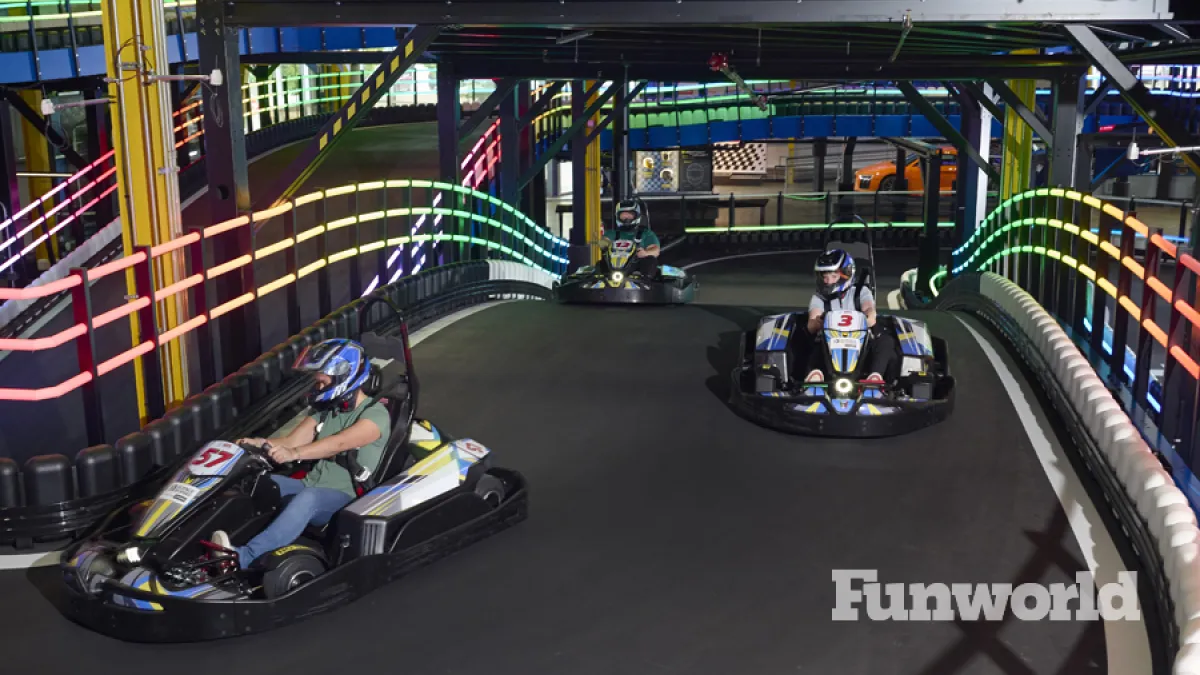
No. 1 A 740-foot long three-level electric go-kart track from K1 Speed featuring three groups of eight cars that have a top speed of 45 miles per hour.
No. 2 Five racing simulators, including four integrated simulators, from SimGear and one Wave Italy F1 simulator, that is the first simulator of its kind located in Pennsylvania.
No. 3 Hands-on STEM-based exhibits highlighting the concept of speed and demonstrating the key principles behind racing like friction, force, reaction time, and energy transfer, accompanied by displays of race cars and motorcycles.
No. 4 The racing themed Pit Stop Trackside Lounge—a restaurant and full bar offering an elevated dining experience overlooking the go-kart track.
The complex also includes two event spaces that can be reserved for parties and corporate events, perfect for generating additional revenue.
Museum admission is required to access the Science of Speed, with the go-karts and simulators, including the SimGear and the Wave Italy, costing extra.
While including a go-kart track in a science museum exhibit is groundbreaking enough, the Kamin Science Center is also marketing the exhibit as an FEC for adults 18 and over on weekend evenings after the rest of the museum closes.
During the evening, there is no admission to the facility, but the cost of the go-karts increases with maximum speed karting offered at a premium. While atypical, using the exhibit as an after-hours entertainment facility is a natural decision for the Science Center as it sits in the middle of the most popular entertainment district in the region, joining two sports stadiums, a casino, a concert facility, several museums and numerous restaurants.
In addition to the potential revenue, Schano sees using exhibits like this as part of a long-range plan to find new and creative ways to attract an adult audience. And, it appears to be working. In addition to the anecdotal comments from people who have not been to the Science Center “since my seventh-grade field trip,” Schano says that 91% of the people engaging on the venue’s social media channels are new to the Science Center.
Although the new exhibit opened just a few weeks ago, the museum already labels the Science of Speed a success. Schano tells IAAPA News that all races during the daytime and evening hours as an FEC have sold out every day, and facility rentals are popular.
“If the first two weeks are any indication, visitors are very, very enthusiastic,” he says.
To help generate repeat visits at night, the Science of Speed is already planning complementary programming in the main museum, special social events, and racing leagues. “It’s an overt effort to attract a new audience, an adult audience,” Schano says.
As best as Schano can tell, the Kamin Science Center is the only museum in the United States offering this experience. While he says that most museums may not have the unique space needed to replicate the Science of Speed, the facility offers lessons to other attractions.
“You don’t have to tell them science is relevant when they can experience it. Go-kart racing is the hook; the science is the story.”