


Funworld
IMMERSION
Engaging Guests in the Age of Participation
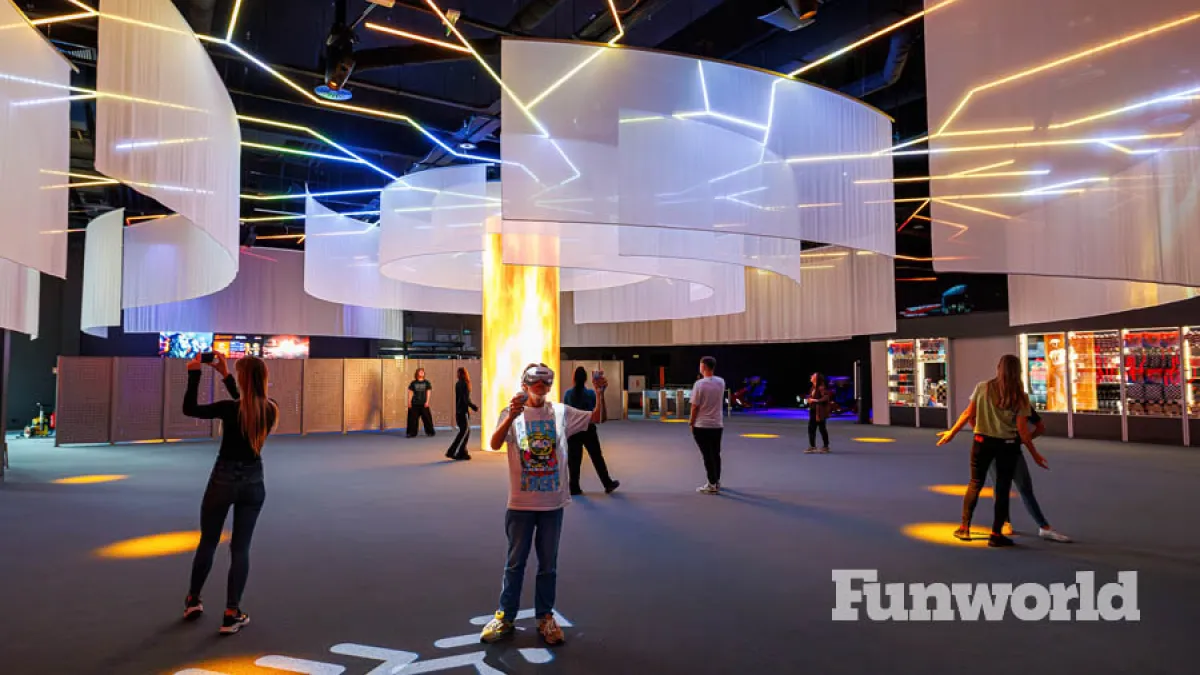
IMMERSION. IT’S THE ANTITHESIS OF THE SOCALLED MILLENNIAL GREY—a design aesthetic defined by clean, desaturated, cooltoned surfaces that reflect a broader visual and psychological mindset. This aesthetic parallels a homogenization of culture and media: an efficient sameness aligned with risk aversion, neutrality, and the desire for control in an increasingly chaotic world.
In contrast, the attractions industry is engaged by designing what feels like a countermovement—a pendulum swing in the opposite direction, marked by a surge in immersive experiences entering the global market.
Immersion is more than a buzz word. It’s a movement. It’s a term used in marketing to describe a vast array of attractions that blur the lines between the physical realm and the fantastical; where technical innovation and artistry push creative bounds that were previously only imagined.
Just like the enigma of creativity itself, Funworld’s look at eight immersive experiences profiled herein form a continuum—rather than fixed categories— with each occupying a different point along that spectrum. Each illustrates the diverse approaches shaping the market. Similar attractions are bundled together to help guide the imagination. Yet, they only scratch the surface of a vast array of attractions that personify Immersion.
Beyond Cinema
THANKS TO CREATIVE WAYS OF USING EMERGING TECHNOLOGIES, adding non-traditional elements to the cinema experience, and theaters adding FEC elements—from arcade games to bowling—immersion is now a feature presentation.
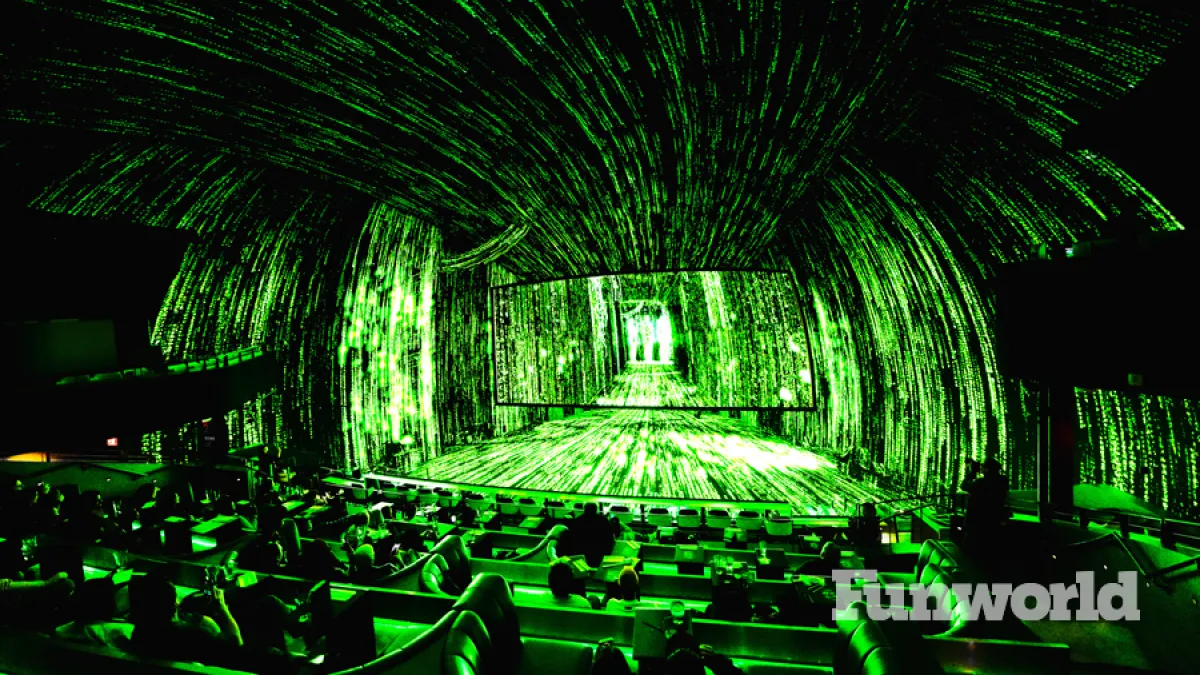
Cosm’s purpose‑built, ultra-modern venues have redefined what “going to the movies” means by offering shared reality experiences that fuse programming like cinematic storytelling, live sports, and event broadcasting with Cosm’s technological innovations: domed theaters using ultra‑high‑resolution LED panels that wrap the audience in a seamless visual field. The concave screen delivers a sense of presence that flat screens simply cannot match.
Unlike conventional theaters, Cosm venues function as multi‑use experiential spaces. Studios can premiere films in formats that feel closer to virtual reality than traditional cinema—without isolating the audience. Sports leagues can deliver “front‑row” experiences to fans outside of the stadium.
The Sphere in Las Vegas captures global attention each time its massive LED exterior and concert-scale interior displays are programmed in a fresh way. Take, for example, productions such as “The Wizard of Oz at Sphere.” This 4D reimagining of the classic 1939 film surrounds viewers with 16K wraparound visuals, haptic seats, wind, fog, fire, sound effects, and even physical props—like leaves and artificial apples that fall from trees into the audience during the iconic woods scene. The 75-minute reimagining (the original film is 104 minutes) uses artificial intelligence to expand the original frame to fill the venue’s dome.
Theaters like Sphere and Cosm are not just enhancing moviegoing; they’re redefining and diversifying the category, creating a new experiential layer to cinema.
“Life Is a Stage, and We Are Merely Players.”
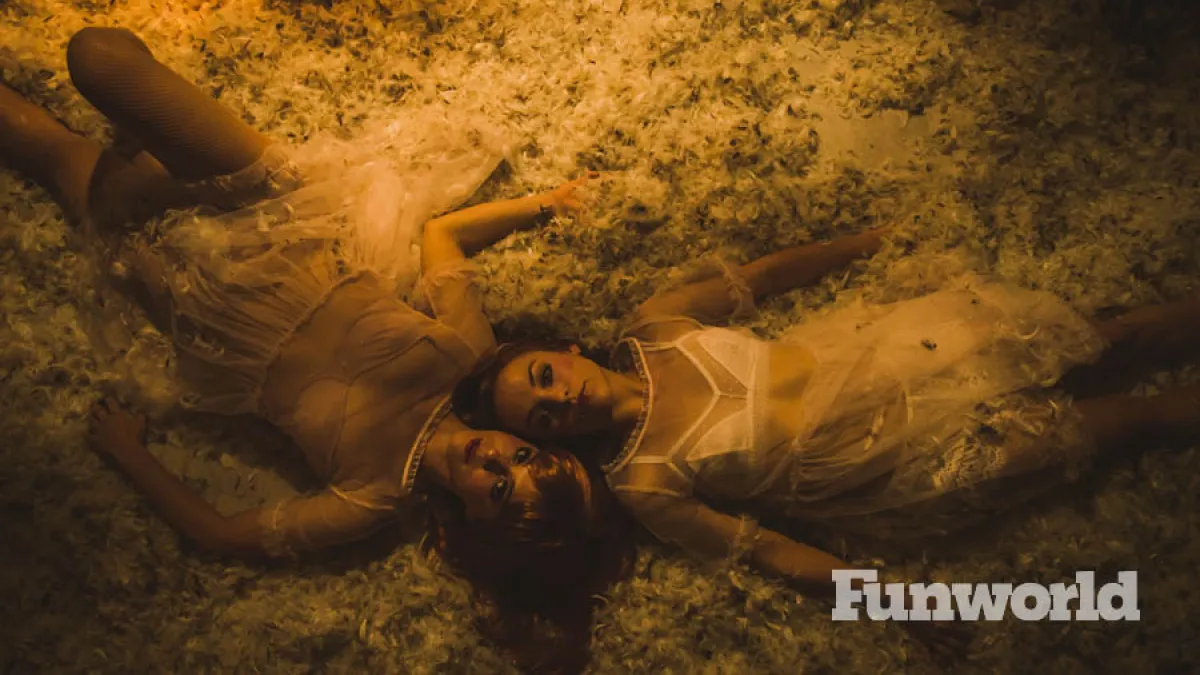
DISSOLVING THE LINE BETWEEN AUDIENCE AND STAGE, immersive live theater is a transformative force in contemporary theatre arts. With Punchdrunk’s landmark productions—most notably “Sleep No More,” which recently concluded its long runs in New York and London—the genre‑defining company reshaped expectations of what theater can be. Now, a new generation of creators have begun building on that foundation, and thus, pushing the form even further.
Simultaneously, Creep LA, a theater company with more than 225 registered members, evolved from a more traditional haunted house format. The company originally pulsed crowds in a linear way through scenes, eventually delivering a boutique, theatrical experience with 60 multiday, intellectual property productions under its belt.
“We created the ultimate black box theater for them to go through,” says Justin Fix, founder and creative director of the Creep LA theater concept from a historic Hollywood mansion that the company calls home.
As the productions play out, guests navigate the corridors and rooms of the old home in a way that is uniquely their own. The company is careful to educate their guests and set expectations. “We have to train the audience … so they don’t come in and experience our stuff like an escape room,” says Fix.
Further strengthening the educational component, the performers—while staying in their roles—have a responsibility to educate as soon as guests enter. “We have to set the tone extremely quickly: what the boundaries are and what you can and can’t do,” says Executive Producer JT Swierczek of the opening scene in the company's production of “The Willows.” During this production, a guest is literally tied up and locked in a closet.
"It's like the best form of cinema, because it's like the one take—these actors are literally breathing live, and the audience basically becomes the POV,” says Fix.
Several Six Flags parks presented The Conjuring: Beyond Fear interactive experience last Halloween. The new boutique haunted maze took small groups of guests through scenes from the Warner Bros. Pictures film of the same name. At different points, live actors placed guests in closets, asked participants to escape by crawling through tunnels, or had visitors hold creepy dolls. Cedar Point branded the up-charge attraction as an interactive “SCREAMium experience.” The immersive haunted house routinely had a wait time extending more than an hour just to purchase tickets.
At its core, these experience are about human connections and transformations.
"What we're ultimately telling our audiences (when they leave our world) is that you are allowed to take up space," Fix says. "You as a human should be seen, you are big enough, we are real enough." It's this kind of immersive theater that invites adults to play, to drop in, and to discover themselves anew.
“But First, Let Me Take a Selfie.”
TREATING VISITORS TO CONTENT WORTHY OF INSTAGRAM, TikTok, or Little Red Book (in China) are immersive, camera‑friendly spaces designed for playful creativity and bold visual storytelling. Attractions filled with themed rooms, oversized props, and vibrant backdrops entice visitors to experiment with poses, lighting, and unique perspectives that don’t require an app filter. Unlike traditional museums, these attractions prioritize interaction and personal expression as a form of exploration and entertainment, with the visitor knowing the content will scream to be shared digitally during and after the visit.
Taking advantage of available retail space, Otherworld Philadelphia, located in the middle of a cluster of suburban-style shopping centers, offers guests the opportunity to explore 55 rooms of large-scale interactive art, mixed reality playgrounds, and secret passageways. Otherworld Philadelphia is an immersive art experience that complements the portfolio of Thirteenth Floor Entertainment Group’s immersive attractions. “Immersion is what transforms an attraction from something guests consume into something they remember. When you create a truly immersive environment, you increase emotional engagement, and emotional engagement drives behavior,” says CEO, Chris Stafford.
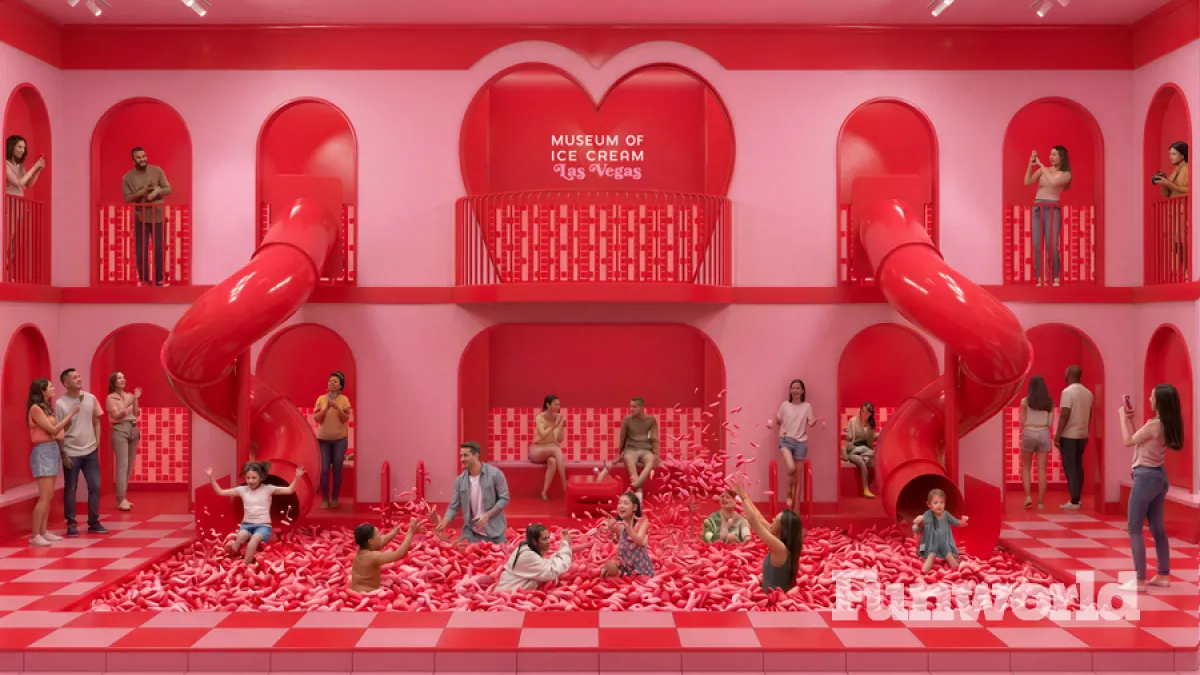
On a larger scale, the Museum of Ice Cream, with locations in major U.S. cities and one in Singapore, opens its 10th location later this year in Las Vegas.
“The word I use is ‘experium,’ a term we created but a category I believe we have helped define over the past decade,” says Manish Vora, co-CEO and cofounder of the Museum of Ice Cream, launched in 2016. Vora explains that the attraction is not a museum in the traditional sense, and it's not a theme park. “It lives in a space between the two, where design and art meets genuine interactivity and participation.” Some might call the attraction a next-level ice cream shop.
Think of the facility as a dessert-themed playground where real ice cream is served and guests are free to plunge down slides into pools of sprinkles. While the Las Vegas location fills 30,000 square feet of space, Vora reflects on the humble beginnings of its first installation. “It was 6,000 square feet in a vacant building in downtown New York City. It was scrappy, imaginative, and it sold out before it even opened,” shares Vora. “What that moment told us was that the appetite for this kind of experience was enormous and largely unmet. People weren't just showing up for ice cream; they were showing up for a feeling.”
For Art’s Sake
BLENDING INTERACTIVITY, SENSORY ENGAGEMENT, AND CREATIVE ENVIRONMENTS, Meow Wolf and Superblue are some of the most globally recognized immersive art experiences wowing guests.
The large‑scale physical installations at Meow Wolf—located in Santa Fe, New Mexico; Denver; Las Vegas; Houston; and Grapevine, Texas (with additional facilities planned for Los Angeles and New York City)—create expansive narrative worlds that invite guests to explore, discover, and co‑create meaning. Superblue, with locations in Miami and London, offer digital environments alongside large‑scale physical installations. Both experiences are distinctly non‑linear, operating in a choose-your-own-adventure format that encourages guests to explore for several hours.
Conversely, Wndr Museum Chicago offers a boutique experience that can be enjoyed in 45 minutes to an hour. Located in the vibrant, walkable West Loop cultural district, the museum occupies a repurposed historic industrial building, echoing the character of its neighboring converted warehouses, indie galleries, and restaurants. Its street‑level visibility also supports steady walk‑in traffic.
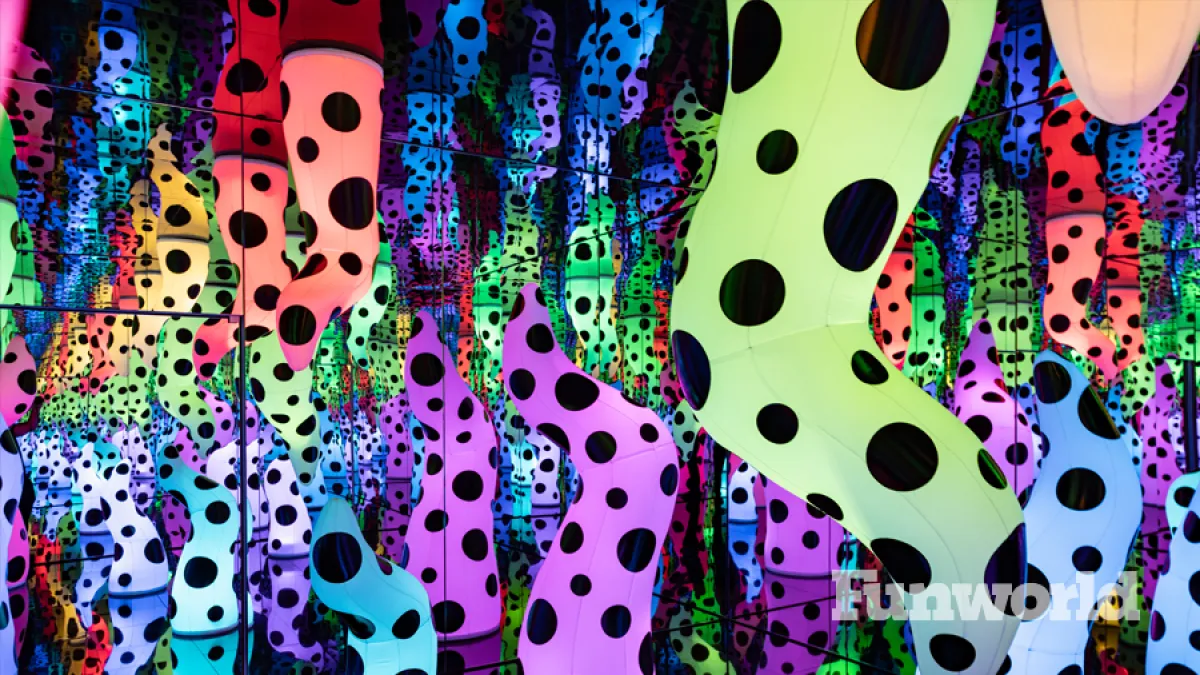
As guests move throughout the museum’s corridors and rooms, they are invited to play, touch, and engage with many of the installations. “Wndr defines immersion as inviting guests to participate in engineering their own moments of awe as they embark on their collective and individual exhibit journeys,” says Cameron Rogers, senior operations coordinator at Wndr Museum Chicago. The attraction offers an interactive museum experience that blends playful learning—such as its light‑bending physics installation where guests experiment with reflection and refraction—with world‑class art, including Yayoi Kusama’s immersive infinity‑mirror environment, “Love is Calling.”
“Our goal is to create moments that resonate beyond the technology itself, allowing each guest to engage with the work in a way that feels meaningful and uniquely their own,” concludes Rogers.
That Belongs in a Museum
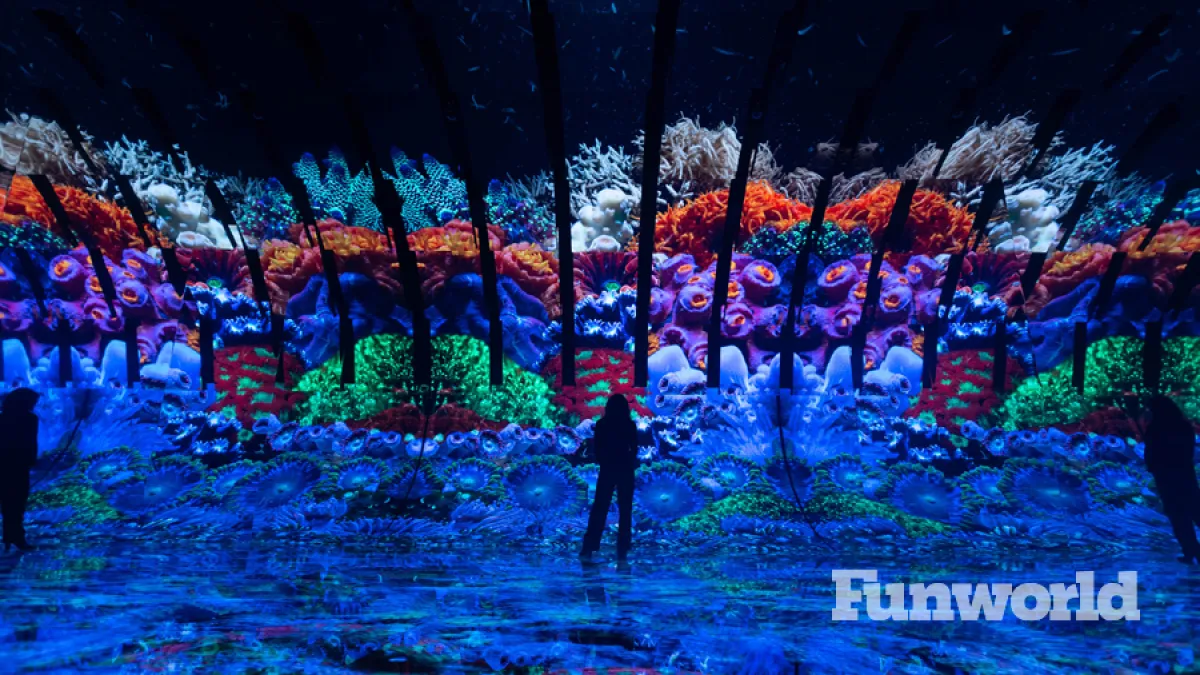
A NEW STYLE OF MUSEUM EXHIBITING HAS EMERGED exemplified by The Blue Paradox. The exhibit is an immersive, science‑driven experience that launched at the Griffin Museum of Science and Industry in Chicago in 2023. The attraction takes guests “underwater” with LED wave walls, recycled‑plastic sculptures, and interactive displays to reveal the scale, causes, and solutions to global ocean plastic pollution. The experience blends large‑scale visuals, data storytelling, and interactive environments to spark action and highlight humanity’s impact on marine ecosystems.
The museum partnered with S.C. Johnson & Son, Inc. to masterfully produce an exhibit that successfully expands the idea of immersion to highlight a profoundly important purpose. “It's the holistic nature of the visual, the auditory, the feeling, the storytelling. It's simple, it's direct, it's very accessible, and all that together takes you through it, invoking different emotions at different times,” says Dr. Patricia Ward, the associate vice president of exhibitions and partnerships and head scientist at the museum. She tells Funworld that the experience “engages you intellectually, but very much emotionally, right from the get‑go.”
The exhibit masterfully blends art and technology to draw guests into the subject matter, surrounding them with 360‑degree LED screens— including the floor beneath their feet. Its message lands through interactive moments that move visitors from the sobering scale of plastic pollution to a grounded sense of optimism. The metrics back it up: In follow‑ups conducted weeks after their visit, the museum found that nearly 84% of visitors
On Brand
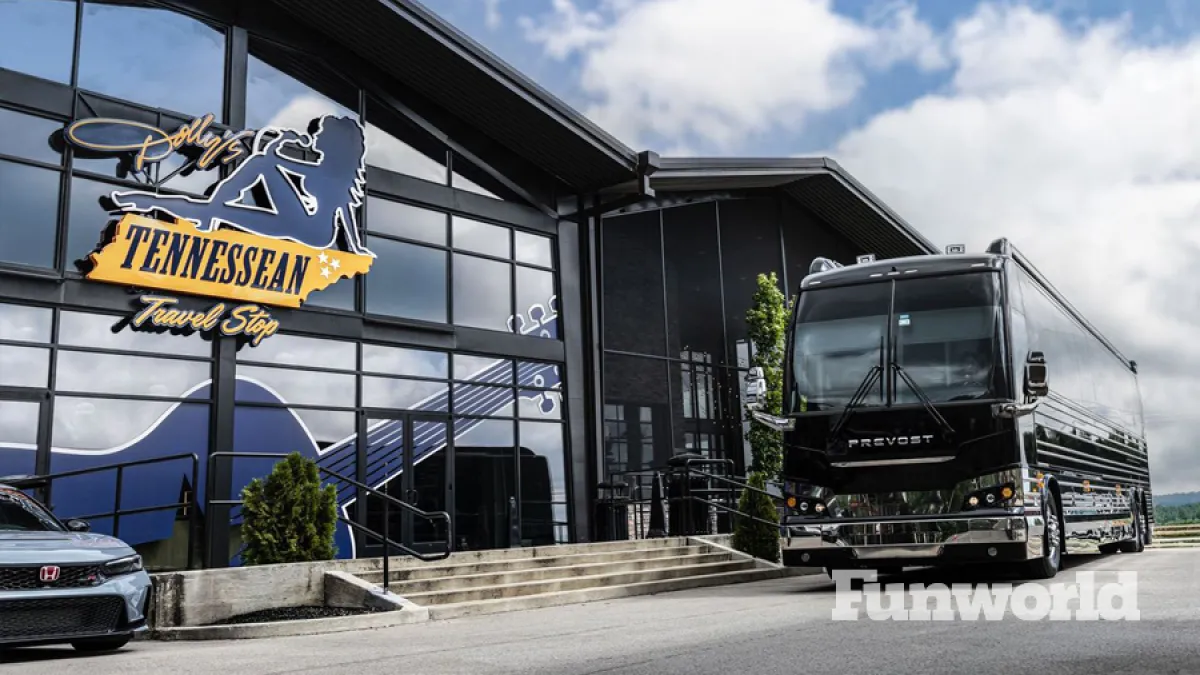
WHO WOULD CONSIDER A GAS STATION AS SOMETHING IMMERSIVE—or as an attraction in its own right? Next exit: Dolly’s Tennessean Travel Stop, off Interstate 65 in Cornersville, Tennessee.
This new roadside travel stop from IAAPA Hall of Famer Dolly Parton goes beyond the namesake’s Pigeon Forge theme park. From the outset, the team designed the property so that “Dolly’s influence is thoughtfully woven throughout the entire guest experience, from the moment visitors arrive,” says Gregory H. Sachs, partner of Dolly’s Tennessean Travel Stop. That influence appears not as memorabilia, but as atmosphere. Warmth, hospitality, and Tennessee charm is “...reflected in the food, retail offerings, design details, and storytelling elements across the property,” Sachs says. Menu items are pulled directly from Dolly’s own cookbook.
This new era of roadside attraction opened in June and distinguishes itself through iconic visual anchors. Sachs describes to Funworld features designed to “create a sense of place that feels distinctly Tennessee.” A custom mural and a Dolly‑inspired tour bus serve as both landmarks and storytelling devices, inviting guests to linger, explore, and engage rather than rush back to the highway. In Sachs’ words, “most travel stops are focused on getting people in and out quickly.” Yet this one is intentionally designed to feel welcoming, enjoyable, and worth the visit.
In Shanghai, the Nanjing Road shopping district is lined with brand name stores so immersive in their design that the walk‑in exploration experience often eclipses the act of shopping itself. Pop Mart—the Beijing‑born toy brand now found worldwide and known for its collectible blind‑box figurines and characters like Cry Babies and Labubu—houses a futuristic, space‑themed interior that feels like stepping into a sleek spacecraft. Just steps away, Choc Choco offers a chocolate‑lover’s dream: part candy shop, part free‑entry museum, complete with towering carved chocolate sculptures that make a visit as experiential as it is sweet.
The Great Escape (Room)
ESCAPING AN ATTRACTION WITH THE HELP OF CLUES and puzzles is a pastime experiencing greater availability than ever before. Crack and Reveal estimates a whopping 50,000 separate escape rooms operate globally.
With concepts possible that match any budget, footprint size, layout possibility, thematic story, creativity level, or target audience, escape rooms can be designed to suit everything from casual first‑timers to highly experienced puzzle enthusiasts.
In his book, “The Future of Storytelling,” Charles Melcher writes the escape room originated in Japan in 2007 as a descendant of story-driven video games of the 1980s and ‘90s.
Escapeology—an operator of more than 50 locations in countries that include the United Kingdom, Canada, Spain, Mexico, and the United States—embraces franchising to bring some of its games to life across its locations in multiple cities. Guests can try their luck at Scooby‑Doo and the Spooky Castle Adventure, Chemical Warfare, or Agatha Christie's Murder On The Orient Express, to name a few.
AmazingXscapes delivers an escape room experience built with the same passion co‑owner Rick Briggs describes when he says a great attraction can be created “on a shoestring budget,” yet still feels “really, really immersive and really cool.” Briggs tells Funworld that while large‑scale productions may cost $50,000 to $60,000, guests enjoy his original adventures just as much—often leaving five‑star reviews. He emphasizes that true immersion isn’t about price; it’s about creativity and care.
Fun and Games
ACTIVATE ILLUSTRATES HOW GAMIFICATION HAS BECOME A DRIVING FORCE in today’s immersive attractions landscape. Their experiences move beyond traditional gameplay by blending physical activity, digital interactivity, and real‑time feedback—an approach that resonates strongly with guests seeking agency and personalization in entertainment.
Activate’s high‑energy arenas place players inside a series of tech‑enabled challenge rooms where lighting, sensors, and responsive environments create a living game space. Guests aren’t just observing the attraction; they’re inside it, making choices, collaborating with one another, and competing in ways that feel immediate and meaningful.
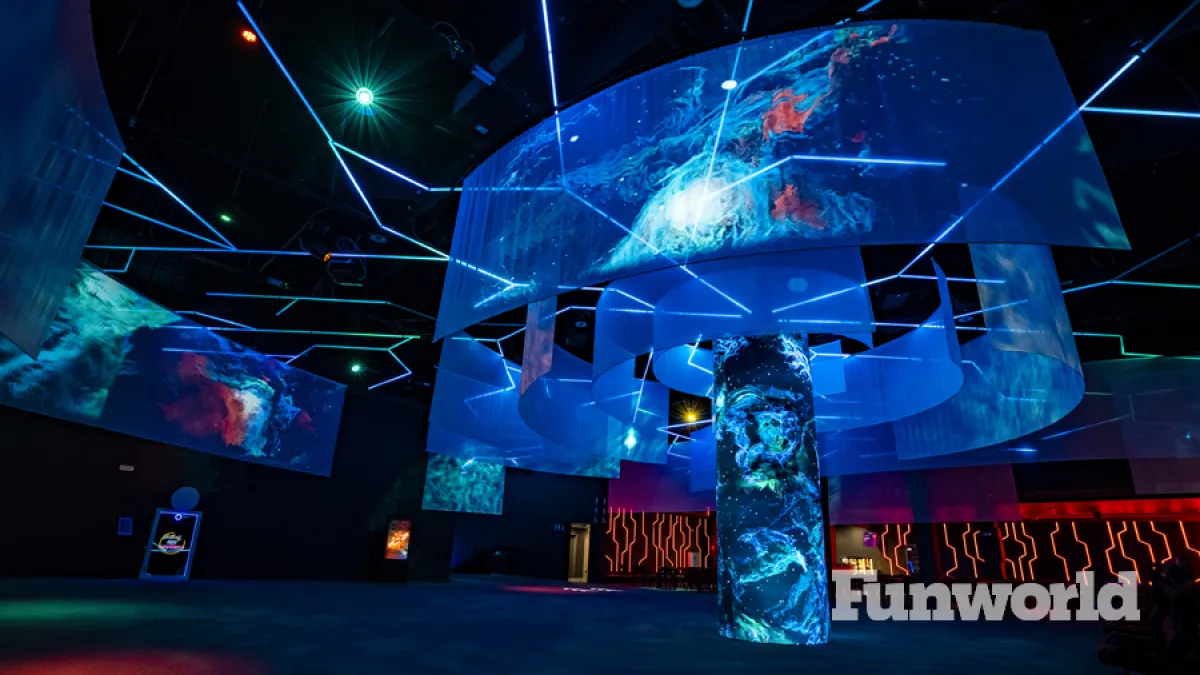
Querion a new concept in immersive family entertainment, launched in June 2026 as an amenity of the 2,500 room Górskie Resorty in Poland. “We were looking for solutions and ways to help our guests make the most of their free time, whatever the weather. And that is how the idea for a hypermedia entertainment park came about,” Karol Brześkiewicz, general director of Górskie Resorty. tells Funworld. The desire of the company that capitalizes on longer length of stays at its resort sought to create an immersive entertainment center that transports guests to other realms. “The technological sophistication of our attractions, as well as the absolutely unique design of the communal areas, means that from the moment they enter, we transport our guests to another world,” says Brześkiewicz.
Querion is the result of a partnership between Austria-based Attraktion! GmbH and Górskie Resorty’s newly established Querion Media Studio, created to develop original content for the venue. At Querion’s opening, the team explained that three of the projections inside the FEC are their own creations, including the media that plays inside Querion’s flying theater.
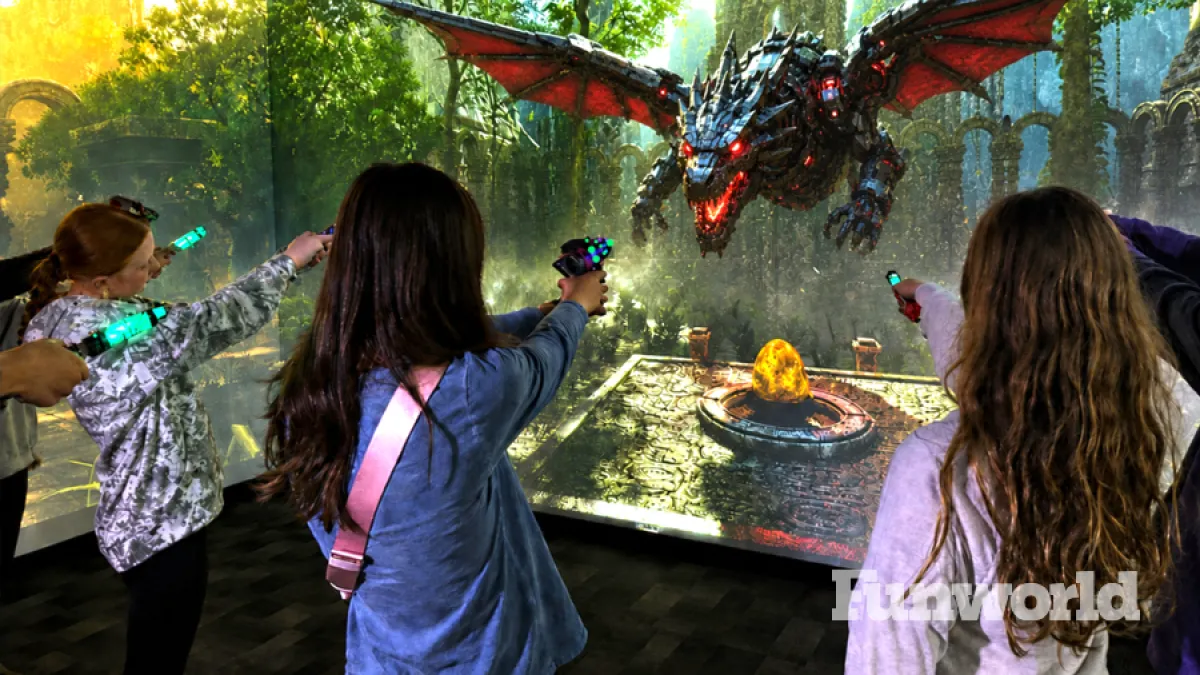
One of the key gamified attractions is the Angry Birds motion game ride, which puts players on a rotating platform with blasters as a 360‑degree screen and synchronized movement create the sensation of being fully immersed in the Angry Birds world.
Across the global attractions industry, these styles of interactive play are responsible for reshaping expectations. Gamification is a core ingredient of modern immersion, giving guests a sense of progress, mastery, and connection that keeps them coming back.

Follow IAAPA for news and event announcements in your favorite social media apps
Connect with the Real Stories Behind the Fun
Follow our social media for authentic stories, special moments, and behind-the-scenes looks from the attractions world.


