

London (IAAPA NEWS) - Elton John’s lyrics to “I’m Still Standing,” ring out during IAAPA Expo Europe’s Opening Ceremony as a performer balances artfully on five skateboards. Many in the audience feel the same—climate change, geopolitical events, rising costs, tougher access to capital and real estate, and evolving guest expectations are reshaping the way attractions think about growth.
Yet, there are reasons for optimism—major developments are headed to the United Kingdom, demand for distinctive concepts remains strong, and the latest research points to the continued growth of the European attractions industry.
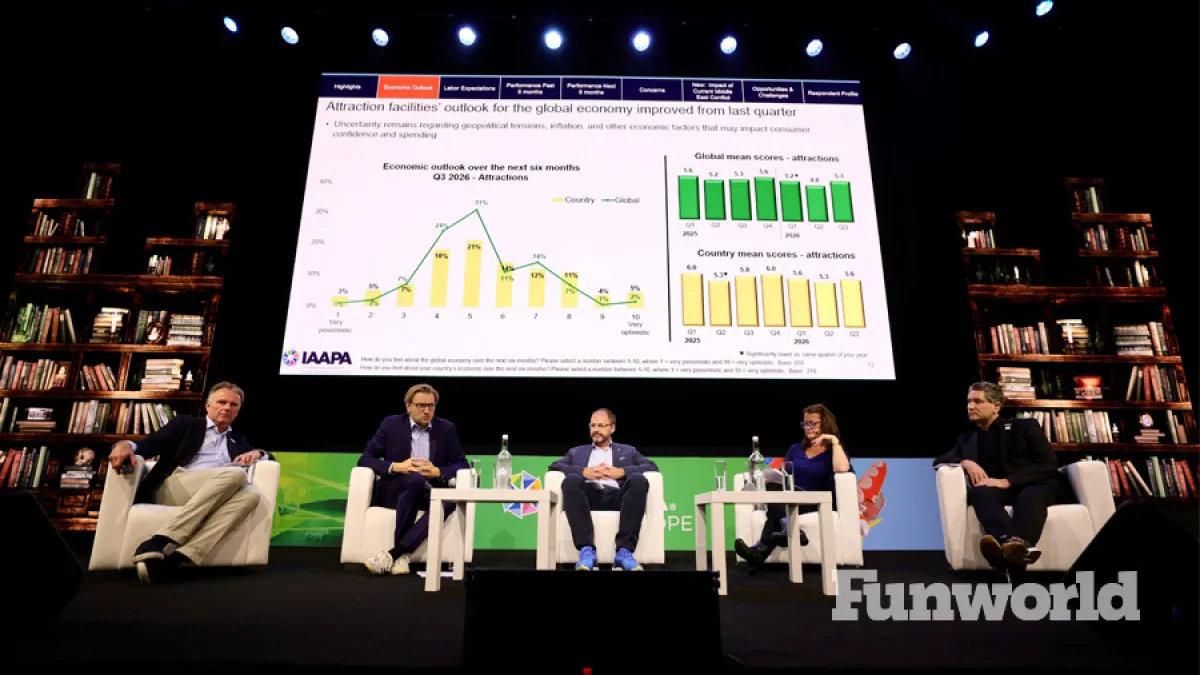
Together, Jakob Wahl, IAAPA president and CEO, Håkon Lund, president of Lund Gruppen and chairman of IAAPA’s ESA (Europe, Sub-Saharan Africa ) regional advisory board, Bart Dohmen, co-owner of TDAC bv, Yael Coifman, senior partner/owner at Leisure Development Partners (LDP), and Chris Lange, chief creative officer and owner of Creative Studio Berlin (CSB) charted the latest trends across the attractions industry.
Weather Impacts
As the sun shines outside outside the London Excel center, everyone agrees that global warming is an immediate consideration for European attractions. “This is the new normal,” Coifman says. “It’s not going to change,” Lund adds. Operators must plan for the implications for guest and staff comfort. Lund predicts “complete re-fits” and air conditioning. Parks will need to invest in shade, covered walkways, climate-controlled restaurants and rest areas, alongside broader climate adaptation strategies. For smaller parks, however, these investments could prove challenging.
Inflation remains an issue, competition is increasing, and securing capital for projects is becoming more difficult. “It’s getting tougher, absolutely,” says Lange, describing the challenges parks face when planning to build and expand into full-day experiences.
Coifman points to major attraction operators which have recently divested assets, highlighting a broader focus among established groups to become more efficient.
The European market is still growing, but at a slower pace. LDP’s Experience Economist Europe research shows the industry’s “total economic impact has grown by one billion euros over the past year,” according to Coifman.
Big Projects Can Lift the Market
Against this backdrop, the U.K. market has experienced considerable activity, with projects including Universal Studios’ Universal United Kingdom Resort, Puy du Fou’s new facility, Therme Manchester developing a sps and water park, and Eden Project Morecambe, a £100 million regenerative and climate-education attraction scheduled to open in winter 2028. “These projects will give the whole industry a boost,” Dohmen believes. Coifman hopes the benefits will extend beyond the biggest operators. She draws parallels with Disneyland Paris, which raised the bar, prompting existing parks and attractions to think and invest more strategically.
The expanded IAAPA Expo Europe trade show floor offers another indication of industry activity, with Wahl reporting that members in the ESA region are “cautiously optimistic.”
New Ways to Grow
Parks have traditionally relied on a new roller coaster, a second gate, or a water park to drive growth. But operators have actively explored different ways to enhance the guest experience, with accommodations proving as one of the clearest opportunities.
Adding an overnight stay can turn a day visit into a destination experience, giving regional parks another way to increase dwell time and deepen their relationship with guests. Lund shares Lund Gruppen’s success with offerings including a Shaun the Sheep themed experience. He advises operators to script a story, so that guests feel immersed in the destination, not trapped in a ghost town after the park closes.
“You have to build block by block,” he says, advocating steady, continuous growth.
Attractions can work together to create a stronger destination. Legoland Billund’s approach demonstrates the value of thinking beyond the park gates and marketing the wider region, Wahl explains.
The Power—and Risk—of Intellectual Property
Intellectual property (IP) remains an important tool for differentiating attractions, whether operators work with known brands or develop their own. But attraction operators must know if the IP is the right one for their market. Simply having a recognizable brand does not guarantee success. Lange believes attractions need ideas and stories that are relevant and unique to their audience.
There are also risks to entering IP agreements. Lund, who has worked with IPs for many years, cautions operators to understand exactly who owns an IP and how secure the relationship is before committing significant investment. An operator might believe they have a long runway with a brand, only to discover that the arrangement might be cut short. “It’s a huge risk in the IP space,” he says.
Making Guests Feel Good
Perhaps the strongest thread that runs through their conversation is the importance of emotional connection. “Visitors will only come back if you make them feel,” Wahl observes.
Family-owned attractions have an advantage here, with their care often shining through in their guest experience. Regional authenticity can be a unique selling point. Astrid Lindgrens Värld (World), for example, only serves food and beverages that is authentic to Astrid Lindgren’s books.
That emotional connection is also tied to value in an environment where consumers are conscious of prices. “People have to perceive parks as valuable experiences,” Coifman says.
Lund asks how the industry can create greater affordability, with Wahl pointing to the Karls parks as an example of low-threshold, accessible experiences that everyone can enjoy. Operators can also experiment with bite-size experiences, or add benefits for higher-paying guests--such as early entry--without necessarily increasing operating costs.
Wahl urges the audience to tap into the insights in IAAPA’s quarterly outlook summaries to keep track of trends and emerging challenges. Whatever changes lie ahead, shared moments will continue to matter. “As long as we can deliver experiences where people can come together and have fun, we will succeed,” he says.