


Funworld
Tips for Navigating Tariffs
How the attractions industry can address increasing costs and shrinking margins
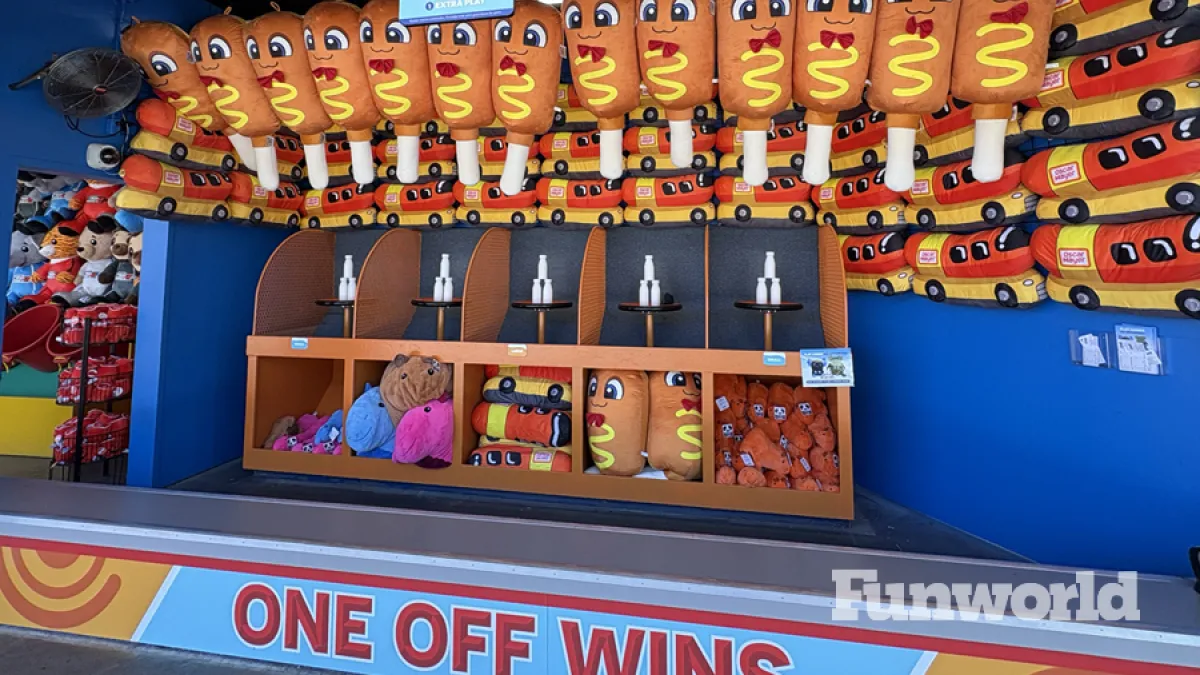
JUST AS THE ATTRACTIONS INDUSTRY BEGAN TO RECOVER from the pandemic-related downturn and post-pandemic inflation, manufacturers, wholesalers, and operators are hit with another obstacle—tariffs.
“Tariffs affect everyone in America,” says Michael Nowak, CEO of family entertainment center wholesaler Redemption Plus. He’s already started to see the financial pinch, with prize merchandise from China facing tariffs of up to 50%.
Reduced Spending Meets Rising Prices
Rising prices on everything from prizes to the steel and aluminum needed to build or maintain rides reduces profit margins for entertainment centers, theme parks, and other attractions. Coupled with declines in consumer spending, tariffs could contribute to a rough ride for the industry over the next few seasons.
“Tariffs are driving a lot of changes in consumer behavior and driving a lot of inflation right now,” said Michael Snipes, associate professor of instruction, Economics at the University of South Florida. “We’re seeing the inflation rate for the United States starting to tick back up, and a big part of that is the tariffs.”
Rather than decreased demand ultimately reducing prices, which would typically happen in a free market, this is a different type of challenge. “It’s not like consumers lost interest and we can advertise more to get them back,” Snipes says. “Consumers and wholesalers are responding to a policy that is outside of the market.”
“Tariff-driven cost pressure is real,” agrees Amandine Servain, VP marketing at Wunderkind, a performance marketing platform. “Our tariffs report last month found 58% of U.S. consumers feel either cautious, pessimistic or panicked about the economy.”
This may directly translate into consumers spending less on entertainment. “Non-necessities are going to be the first thing to get cut,” Snipes says.
However, the real pressure for attractions will come from diminished purchasing power. “Tariffs are increasing prices for wholesalers, and that’s going to feed down the food chain,” he says. “If most of your product is coming from overseas, your business is going to feel it acutely.”
Keeping tabs on ever-changing tariffs, managing cash flow and inventory, and focusing on delivering greater value can help combat these challenges.
Understanding Tariffs in the Attractions Industry
Food, merchandise, raw materials for repairs or new construction, along with the aforementioned prizes, often come from overseas and face tariffs. Sorting out tariff rates is a moving target, with no high score celebration at the end if you hit the mark with laser precision.
There’s also legislation in the works that would force the U.S. government to return tariff money to small businesses, whether or not the Supreme Court rules the tariffs as illegal.
Here are a few current figures to keep in mind that could drive buying decisions:
- Aluminum and steel tariffs on imports doubled to 50% this summer, according to the Council on Foreign Relations.
- Chinese goods, across the board, may face tariffs of up to 57%.
- Products from India could face 25% tariffs, according to a report from the Peterson Institute for International Economics.
Going Hyper-Local
Sourcing from the United States, whenever possible, can help domestic operators control costs. For instance, regional parks may consider purchasing food and beverages hyper-locally, eliminating tariffs and reducing fuel costs.
Inventory Management
Of course, certain items essential to theme park and family entertainment center operations can’t be sourced locally. That’s when operators must decide whether they want to increase prices, operate on slimmer margins, or deploy a combination of both solutions to control costs.
That’s a dilemma Nowak, as a wholesaler, faced this year. Fortunately, his large warehouse allowed him to stockpile merchandise.
“We knew this was going to come,” he says. “About a year ago, we started to buy heavy. But some of the people in this industry don’t have the space to store merchandise.”
Snipes acknowledges that many businesses have no choice but to raise prices.
“The only thing you can do is see how much you can kick the cost down to consumers in the form of higher prices,” he says.
Leveraging Technology to Manage Your Supply Chain
Inventory management is a key to staying competitive. Implementing the right processes and apps can help.
“For entertainment operators, technology and third-party logistics can be real equalizers,” says Ammar Moiz, CEO of Mayple Global, a logistics platform primarily for e-commerce companies. “Operators who consolidate inventory via cloud-based platforms can see what they have and where, in real time, to reduce over-ordering.”
He noted that e-commerce brands have deployed these tactics with success. “It can work just as well for entertainment operators,” he says.
Moiz adds that 3PLs spread shipping and warehousing costs over multiple partners to reduce per-unit costs.
“Being able to evolve from a reactive strategy to a proactive supply chain strategy can preempt disruptions, better manage tariffs, and convert logistics into a source of growth rather than a friction point,” he says.
Changing Product Mix to Improve Margins
Nowak’s warehouse space and strategic forethought helped him delay raising prices. As he re-stocks, tariffs on products coming in from China have caused him to re-think his product lines.
“I think this is a new normal,” he says. “I think what people can do is consider if their product mix has to change. It’s just [important] to get really intentional on what you’re buying.”
When deciding whether to raise prices, absorb the cost, or switch up product lines, Nowak recommends evaluating each expense in terms of its value.
He described the difference between what he views as “costly” vs. “expensive” products. “Costly is a high price, but good value, while expensive is a low value with a high cost,” he says. “Has something that was previously a good value, even though it cost more, just become expensive, but no longer a good value?”
Appealing to Consumers in a Struggling Economy
Rising costs are just one part of the equation. Economic uncertainty adds to an operator's concerns moving into the holiday season and preparing for next year.
The IAAPA State of the Global Attractions Industry Q3 2025 report found that in North America, theme park operators pivoted with discounted pricing to attract visitors. However, once inside the gates, guests spent less, reducing incremental revenue for parks.
The U.S. Tariffs Consumer Impact survey from Wunderkind supported these findings on a larger scale; in general, more than one-third (38%) of consumers are cutting non-essentials.
However, Servain pointed out these numbers offer flexibility across demographics.
“Millennials and Gen Z are still deal-seeking and experimenting with new brands,” she says. “That tells me demand won’t evaporate completely; rather it will shift toward visible value and flexible offers.”
She recommends “triggered messaging” and “personalized offers” to streamline the customer journey and shorten the conversion cycle.
This strategy proved effective for SeaWorld, which increased bookings five-fold and increased digital revenue by 2.4%, according to a Wunderkind case study.
“Lead with value framing, target discounts precisely, and let identity and behavior signals determine who needs an incentive and who does not,” Servain says. “Resist the urge to train guests to wait for a sale.”
Focus on the Guest Experience
Nowak emphasizes the importance of focusing on a company’s core values. “Keep the main thing, the main thing,” he suggests. “Of course you have to look at costs, but you can’t do it at the detriment of the customer experience. Are you still delivering a high-quality product?”

Follow IAAPA for news and event announcements in your favorite social media apps
Connect with the Real Stories Behind the Fun
Follow our social media for authentic stories, special moments, and behind-the-scenes looks from the attractions world.


