


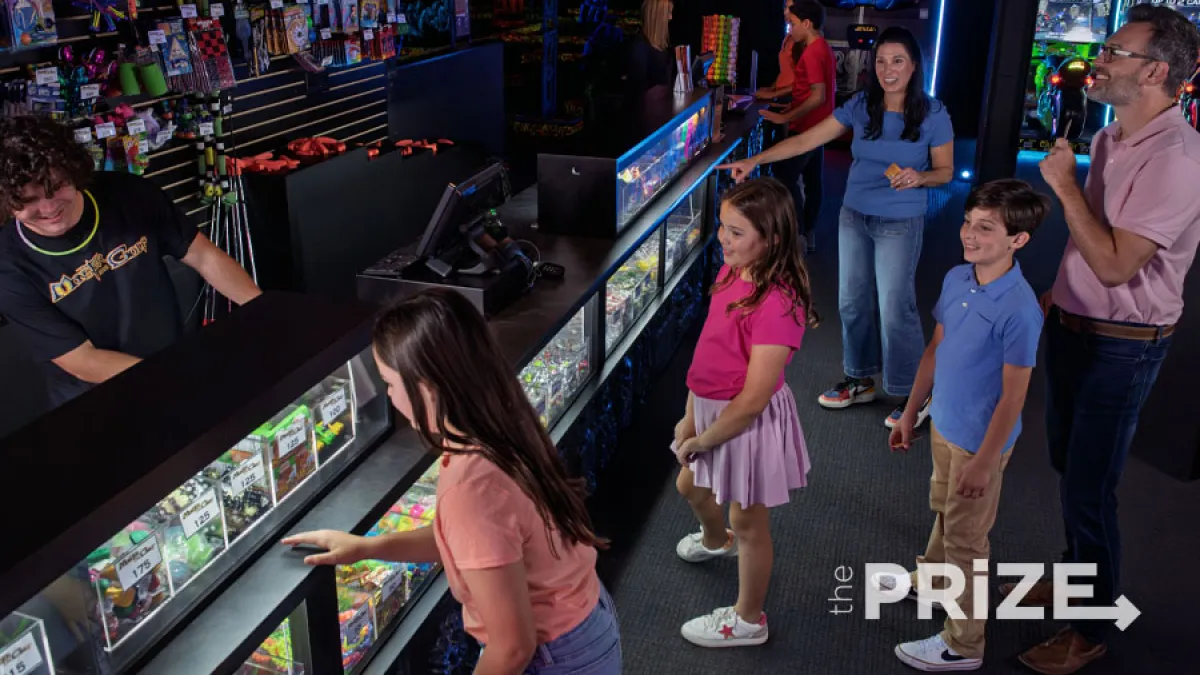
Guests may never pinpoint why a family entertainment center (FEC) feels enjoyable. Often it is the result of thoughtful design and operational decisions that go unnoticed. From lighting and sound to a well-kept environment, these elements subtly shape how guests feel and whether they return. While FEC operators are familiar with these considerations, experts in psychology, wayfinding, and operations offer fresh perspectives on strengthening the guest experience.
Design for Comfort and Control
“Design can make certain outcomes more or less likely,” says Sally Augustin, an environmental and design psychologist and founder of Chicago-based consulting firm Design with Science.
Augustin notes that shapes, color, textures, and dimensions can influence guests’ feelings. Curved shapes and curved lines in upholstery, flooring patterns, seating, and visuals can convey comfort. Seating choices also matter. “Extroverts really enjoy sitting on couches, for example, sofas, and introverts would prefer sitting on individual chairs,” she says.
And as operators consider introducing more technology and automation into design decisions, Augustin recommends preserving guests’ ability to make choices that suit their goals. “People still need to feel in control of their own situation,” says Augustin.
Help Guests Understand the Space
Jonathan Mugmon—wayfinding director and principal at Kansas City-based design firm Populus and author of “The Science of Wayfinding: Psychology, Strategy, and Navigation in Large-Scale Environments”—works with large-scale venues and events, but his wayfinding ideas can be applied to FECs.
“When someone enters a large place, their understanding of the environment is narrow and fragmented, just based upon what they see right around them,” Mugmon explains.
Even in a small facility, guests may understand only what is directly in front of them, says Mugmon, who advises operators to communicate what’s available—including games or attractions hidden by landscaping or walls—through multiple information sources.
Mugmon adds that FEC guests also need recognizable landmarks, distinct districts, and paths to navigate a space, feel comfortable, and reconnect with others in their group or family.
Support Staff Who Shape the Guest Experience
For Christopher King—partner and CEO of Monster Entertainment near Charlotte, North Carolina—training employees is an invisible and behind-the-scenes element that shapes the guest experience. Monster Entertainment is the parent company of Monster Mini Golf, which has more than 40 locations.
Monster’s training emphasizes connecting with every guest. “We train on age-appropriate connection with humans of all ages,” King says.
Employees learn to use welcoming expressions, animated conversation, and personalized interactions with children, including getting down to a child’s eye level and offering playful reassurance when they’re frightened. In addition, staff members are trained on how to naturally connect with adults and groups.
King also encourages operators to demonstrate the same guest care as staff. “If you want staff to treat the guests a certain way, is it coming from the top down?” he asks.
Find Hidden Friction
Dennis Speigel—an IAAPA Hall of Fame inductee and founder and CEO of International Theme Park Services, Inc., an attractions consultancy—proposes observing families and guests from the parking lot onward and watching for hesitation, backtracking, and repeated requests for directions, then pairing observations with guest feedback and operating data to make improvements.
“We want those friction points to become visible to us and invisible to the guest, really,” Speigel says.
Jason Mudd, CEO of Axia Public Relations, who has worked with FECs on guest experience and reputation, recommends examining the last 100 guest reviews for descriptions of feelings about the FEC.
“Guests naturally describe what bothered them using specific words: crowded, confusing, chaotic, rushed,” Mudd says. “Track the word cloud, not just the star rating, because the rating tells you the general feedback and the words tell you the specific cause.”
In the end, every guest interaction or moment issues an “invisible receipt,” according to Mudd. “Guests don’t consciously tally it in the moment, but they cash it in later—in a review, in whether they come back, in whether they bring a friend next time,” he says.