


ARRIBA: Esta foto de la Autoridad Sueca de Investigación de Accidentes muestra el trayecto entre los frenos Jetline 1 y 2. La línea de puntos rojos es la parte de la vía en la que se produjo el raspado y los daños resultantes. La línea roja de puntos es la parte de la vía donde se produjo el raspado y los daños resultantes. La flecha señala el tren accidentado en la parte inferior derecha de la imagen, sobre la línea de puntos. La estación y el tren que se detuvo allí son visibles en la parte inferior de la imagen. foto cortesía: SHK
Artículo
Ideas de Gröna Lund
Principales conclusiones del accidente de la montaña rusa Jetline.
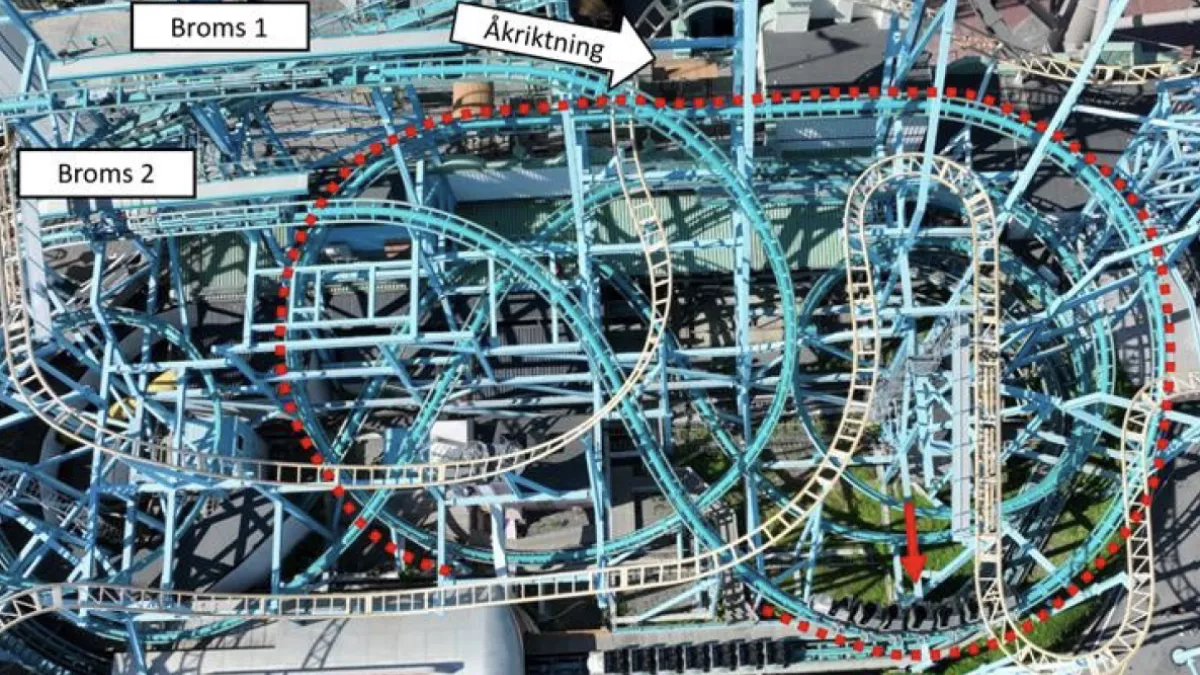
Esta foto de la Autoridad Sueca de Investigación de Accidentes muestra el trayecto entre los frenos Jetline 1 y 2. La línea roja de puntos es la parte de la vía donde se produjo el raspado y los daños resultantes. La flecha señala el tren accidentado en la parte inferior derecha de la imagen sobre la línea de puntos. La estación y el tren que se detuvo allí son visibles en la parte inferior de la imagen.Foto cortesía: SHK
En junio, la Autoridad Sueca de Investigación de Accidentes publicó su informe final de investigación sobre el accidente de la montaña rusa Jetline en el parque de atracciones Gröna Lund, ocurrido en 2023. (La Junta Nacional de Investigación de Accidentes de Suecia [SHK] investiga accidentes e incidentes graves desde el punto de vista de la seguridad, tanto si ocurren en tierra, mar o aire.)
Como fuente de confianza del sector mundial de las atracciones en cuanto a noticias y perspectivas, Funworld visitó Gröna Lund en Estocolmo días después de que la SHK emitiera su informe para obtener una perspectiva y compartir cómo las atracciones de todo el mundo pueden instituir cambios que evitarán un accidente similar.
- Lea las perspectivas y benefíciese del contexto compartido por el director ejecutivo del parque, Jan Eriksson, a continuación.
- Descargue el informe completo de 65 páginas de la Autoridad Sueca de Investigación de Accidentes (en sueco).
- Descargue una versión en inglés del informe de la Autoridad Sueca de Investigación de Accidentes.
El accidente
La montaña rusa Jetline se inauguró en Gröna Lund en 1988. La pista de la atracción tiene 800 metros de longitud y una velocidad máxima de 90 km por hora. Cada tren cuenta con siete vagones y tiene capacidad para 14 pasajeros.
El domingo 25 de junio de 2023, un tren que transportaba a 11 pasajeros se detuvo bruscamente después de haber recorrido aproximadamente un tercio de la pista. En ese momento, Jetline tenía tres trenes en funcionamiento (con trenes parados en una zona de vías de almacenamiento).
SHK determinó que el accidente se produjo cuando se rompió el brazo portante (suspensión de las ruedas) de la parte delantera del tren. Las partes del brazo portante -con las ruedas a cada lado del tren- se desprendieron por completo y cayeron. Esto provocó una fuerte frenada, ya que el bastidor inferior del vagón cayó hacia la vía y empezó a golpear las juntas de la estructura de la vía. El fuerte frenazo obligó a los pasajeros a salir despedidos hacia delante contra sus barras de seguridad. Como consecuencia, tres de los pasajeros se cayeron del vagón, con el resultado de un muerto y un herido grave. Dos de los pasajeros que permanecieron sentados en el tren sufrieron heridas graves, mientras que todos los demás sufrieron heridas leves.
Causas del fallo
El informe recoge que se produjo una fractura del brazo de soporte. Este fallo fue consecuencia de una "resistencia insuficiente", debido a deficiencias en las uniones soldadas y a la ausencia de una pieza esencial dentro de la estructura de la tubería. El brazo de soporte que falló era uno de los cinco encargados por Gröna Lund y fabricados por un contratista en 2019.
SHK escribió en su investigación que el accidente fue causado por deficiencias en el pedido, la fabricación y la falta de inspección de los nuevos brazos de soporte. Los controles insuficientes no garantizaron la mano de obra, tanto durante la fabricación como antes de que los brazos de soporte se instalaran en el tren. En definitiva, el informe de SHK concluía que los trabajos realizados en Gröna Lund no proporcionaban la seguridad adecuada contra accidentes en Jetline. (La investigación también reveló deficiencias en las normas suecas sobre equipos de atracciones y una escasa supervisión pública). SHK hizo recomendaciones de seguridad a Gröna Lund, la Autoridad Policial, el Gobierno sueco y la IAAPA.
Prevención y mejores prácticas
Usando el ejemplo de las experiencias de Gröna Lund, la investigación de SHK y los cambios implementados en el parque desde junio de 2023, el CEO Jan Eriksson ofreció total transparencia cuando se sentó con Funworld para proporcionar formas en que los operadores pueden implementar nuevas mejores prácticas, actualizar procesos y anticipar mejor las necesidades de seguridad, todo con el objetivo de prevenir accidentes en el futuro.
Financiar los viajes de inspección
"Para evitar situaciones similares, en el futuro estaremos mucho más cerca de los fabricantes y junto con DEKRA, nuestro socio de pruebas". afirma Eriksson. Esto incluye pedir a los representantes que revisen la documentación y que viajen para inspeccionar el proceso de fabricación.
"Si nos fijamos en las piezas de repuesto o en el trabajo que se ha realizado en otras atracciones desde el accidente, hemos hecho bastantes visitas in situ junto con DEKRA", afirma. Eriksson recomienda a los responsables de mantenimiento que incluyan un presupuesto para viajes y envíen a un miembro de su equipo a inspeccionar el proceso de fabricación de piezas en las instalaciones de un proveedor.
Transparencia
La investigación de SHK reveló que el proveedor elegido por Groenlandia -con el que el parque tenía contrato desde hacía 15 años- utilizó a un tercero para realizar trabajos de soldadura. Eriksson afirma que esto se hizo sin consultar a su equipo.
"Sin informarnos, ése fue en cierto modo el primer gran error en el proceso de fabricación", afirma. Utilizando este ejemplo, afirma que los responsables de mantenimiento y sus contratistas deben mantener un diálogo continuo a lo largo del proceso de producción.
Comunicación abierta
Una cultura de comunicación abierta -en la que las preguntas sean bienvenidas- es primordial. Eriksson afirma que el proveedor externo mantuvo discusiones internas en las que se expresaron dudas sobre los planos de fabricación de Jetline, proporcionados por Schwarzkopf, el fabricante de la atracción en 1988.
"[Sus preguntas] nunca se ventilaron con nuestro socio, ni con nosotros. Así que se quedaron en el proveedor externo... pero tomaron una decisión y, por desgracia, se equivocaron", afirma.
De cara al futuro, Eriksson promete que Groenlandia estará "mucho más informada en todo momento"."
Formación y certificación adecuadas
La investigación de la SHK también descubrió que el soldador que realizó el trabajo en los brazos portadores de Jetline en 2019 no tenía la experiencia adecuada ni la certificación necesaria.
"Pero aun así aceptaron el trabajo y nunca airearon las incertidumbres que tenían, lo que fue catastrófico", comparte Eriksson. Eriksson insta a los responsables de atracciones a que se tomen el tiempo necesario para asegurarse de que el proveedor elegido cuenta con el ancho de banda, la capacidad y los conocimientos necesarios para llevar a cabo un pedido de forma segura.
"Yo recomendaría contar con los inspectores y el equipo de ingeniería desde el principio", afirma. Esto incluye reunir a todas las partes en una reunión de planificación en la que el equipo de mantenimiento de la atracción pueda identificar los puntos críticos, las habilidades necesarias y el tipo de pruebas que podrían eliminar los riesgos.
Documentación e investigación
Eriksson también hace hincapié en la necesidad de que las atracciones desarrollen una documentación organizada para cada atracción, con una lista de todo el mantenimiento, el historial de servicio, las actualizaciones mecánicas, las inspecciones y los controles, desde hace un par de años para asegurarnos de que no hemos tenido un proceso similar en algún otro lugar", dice, explicando a Funworld que ninguna otra atracción de Groenlandia tiene una historia paralela a la de Jetline.
Conclusión
Groenlandia ha tomado la decisión de cerrar definitivamente Jetline. Está previsto que la atracción sea desmantelada después de la temporada 2024.
Este reportaje original de IAAPA News apareció por primera vez en IAAPA News Hub. Para más artículos y vídeos sobre la industria mundial de atracciones y para leer la versión digital de la revista Funworld, haga clic aquí.
Declaración a la IAAPA el 28 de enero de 2026 Jan Eriksson |
La sentencia del tribunal, enero de 2026
El Tribunal de Distrito de Estocolmo multó a Gröna Lund el 28 de enero de 2026 en relación con el descarrilamiento de la montaña rusa Jetliner 2023, que causó la muerte de un pasajero y heridas a otros nueve. El tribunal señaló que un brazo de soporte del tren de aterrizaje se soltó bajo el primer vagón de un tren. Esto a su vez hizo que el brazo de soporte desprendido golpeara varias juntas de la vía, provocando una parada inesperada que expulsó a varios pasajeros.
El tribunal dictaminó que Gröna Lund actuó negligentemente en el pedido de los brazos de soporte recién fabricados al incluir documentación insuficiente. El tribunal también dijo que el parque temático no se aseguró de que el trabajo lo realizara un soldador competente.
La Autoridad Sueca de Investigación de Accidentes publica un informe en junio de 2024
En junio de 2024, la Autoridad Sueca de Investigación de Accidentes publicó su informe final de investigación sobre el accidente de la montaña rusa Jetline en el parque de atracciones Gröna Lund, ocurrido en 2023. (La Junta Nacional de Investigación de Accidentes de Suecia [SHK] investiga los accidentes e incidentes graves desde el punto de vista de la seguridad, tanto si ocurren en tierra, mar o aire)
Como fuente de confianza del sector de las atracciones a nivel mundial en cuanto a noticias y conocimientos, Funworld visitó Gröna Lund en Estocolmo días después de que la SHK publicara su informe para adquirir perspectiva y compartir cómo las atracciones de todo el mundo pueden instituir cambios que eviten un accidente similar.
- A continuación podrá leer las opiniones y beneficiarse del contexto compartido por el director general del parque, Jan Eriksson.
- Descargue el informe completo de 65 páginas de la Autoridad Sueca de Investigación de Accidentes (en sueco).
El accidente
La montaña rusa Jetline se inauguró en Gröna Lund en 1988. La pista de la atracción tiene 800 metros de longitud y una velocidad máxima de 90 km por hora. Cada tren tiene siete vagones y capacidad para 14 pasajeros.
El domingo 25 de junio de 2023, un tren que transportaba 11 pasajeros se detuvo bruscamente tras haber recorrido aproximadamente un tercio de la vía. En ese momento, Jetline tenía tres trenes en funcionamiento (con trenes parados en una zona de vías de almacenamiento).
SHK determinó que el accidente se produjo al romperse el brazo portante (suspensión de las ruedas) de la parte delantera del tren. Las partes del brazo portante -con las ruedas a cada lado del tren- se desprendieron por completo y se cayeron. Esto provocó una fuerte frenada, ya que el bastidor inferior del vagón cayó hacia la vía y empezó a golpear las juntas de la estructura de la vía. El fuerte frenazo obligó a los pasajeros a salir despedidos hacia delante contra sus barras de seguridad. Como consecuencia, tres de los pasajeros se cayeron del vagón, con el resultado de un muerto y un herido grave. Dos de los pasajeros que permanecieron sentados en el tren sufrieron heridas graves, mientras que todos los demás sufrieron heridas leves.
Causas del fallo
El informe indica que se produjo una fractura del brazo de soporte. Este fallo fue consecuencia de una "resistencia insuficiente", debida a deficiencias en las uniones soldadas y a la ausencia de una pieza esencial dentro de la estructura de la tubería. El brazo de soporte que falló era uno de los cinco encargados por Gröna Lund y fabricados por un contratista en 2019.
SHK escribió en su investigación que el accidente fue causado por deficiencias en el pedido, la fabricación y la falta de inspección de los nuevos brazos de soporte. Los controles insuficientes no garantizaron la mano de obra, tanto durante la fabricación como antes de que los brazos de soporte se instalaran en el tren. En definitiva, el informe de SHK concluía que los trabajos realizados en Gröna Lund no proporcionaban la seguridad adecuada contra accidentes en Jetline. (La investigación también reveló deficiencias en las normas suecas sobre equipos de atracciones y una escasa supervisión pública) SHK hizo recomendaciones de seguridad a Gröna Lund, la Autoridad Policial, el Gobierno sueco y la IAAPA.
Prevención y buenas prácticas
Con el ejemplo de las experiencias de Gröna Lund, la investigación de la SHK y los cambios aplicados en el parque desde junio de 2023, el director general Jan Eriksson ofreció total transparencia cuando se sentó con Funworld para ofrecer formas en que los operadores pueden aplicar nuevas mejores prácticas, actualizar los procesos y anticipar mejor las necesidades de seguridad, todo ello con el objetivo de prevenir accidentes en el futuro.
Financiar los viajes de inspección
"Para evitar situaciones similares, en el futuro estaremos mucho más cerca de los fabricantes y junto con DEKRA, nuestro socio de pruebas" Afirma Eriksson. Esto incluye pedir a los representantes que revisen la documentación y viajen para inspeccionar el proceso de fabricación.
"Si nos fijamos en las piezas de repuesto o en el trabajo que se ha realizado en otras atracciones desde el accidente, hemos hecho bastantes visitas in situ junto con DEKRA", afirma. Eriksson recomienda a los responsables de mantenimiento que incluyan un presupuesto para viajes y envíen a un miembro de su equipo a inspeccionar el proceso de fabricación de piezas en las instalaciones de un proveedor.
Transparencia
La investigación de SHK reveló que el proveedor elegido por Gröna Lund -con el que el parque contrató durante 15 años- utilizó a un tercero para realizar trabajos de soldadura. Eriksson afirma que esto se hizo sin consultar a su equipo.
"Sin informarnos, ese fue en cierto modo el primer gran error en el proceso de fabricación", afirma. Utilizando este ejemplo, afirma que los responsables de mantenimiento y sus contratistas deben mantener un diálogo continuo a lo largo del proceso de producción.
Comunicación abierta
Es fundamental una cultura de comunicación abierta, en la que las preguntas sean bienvenidas. Eriksson cuenta que el proveedor externo mantuvo conversaciones internas en las que expresó sus dudas sobre los planos de fabricación de Jetline, proporcionados por Schwarzkopf, el fabricante de la atracción en 1988.
"[Sus dudas] nunca se ventilaron con nuestro socio, ni con nosotros. Así que se quedaron en el proveedor externo... pero tomaron una decisión y, por desgracia, se equivocaron", afirma.
De cara al futuro, Eriksson promete que Groenlandia estará "mucho más informada en todo momento"
Formación y certificación adecuadas
La investigación de SHK también descubrió que el soldador que realizó el trabajo en los brazos portadores de Jetline en 2019 no tenía la experiencia adecuada ni la certificación necesaria.
"Pero aun así aceptaron el trabajo y nunca airearon las incertidumbres que tenían, lo cual fue catastrófico", comparte Eriksson. Eriksson insta a los responsables de atracciones a que se tomen el tiempo necesario para asegurarse de que el proveedor elegido cuenta con el ancho de banda, la habilidad y la competencia necesarias para completar un pedido de forma segura.
"Yo recomendaría contar con los inspectores y el equipo de ingeniería desde el principio", afirma. Esto incluye reunir a todas las partes en una reunión de planificación en la que un equipo de mantenimiento de atracciones pueda identificar los puntos críticos, las habilidades necesarias y el tipo de pruebas que podrían eliminar los riesgos.
Documentación e investigación
Eriksson también insiste en la necesidad de que las atracciones elaboren una documentación organizada para cada atracción, en la que figure todo el mantenimiento, el historial de revisiones, las actualizaciones mecánicas, las inspecciones y los controles.
"A la luz del accidente, por supuesto, hemos revisado todos nuestros contactos con proveedores, toda nuestra gestión de piezas de repuesto, etc., desde hace un par de años, para asegurarnos de que no hemos tenido un proceso similar en algún otro lugar", dice, explicando a Funworld que ninguna otra atracción de Gröna Lund tiene una historia paralela a la de Jetline.
Conclusión
Gröna Lund ha tomado la decisión de cerrar definitivamente Jetline. El desmantelamiento de la atracción está previsto para la temporada 2024.

Sigue a IAAPA para noticias y anuncios de eventos en tus aplicaciones de redes sociales favoritas
Conecta con las historias reales que hay detrás de la diversión
Siga nuestras redes sociales para conocer historias auténticas, momentos especiales y los entresijos del mundo de las atracciones.


