


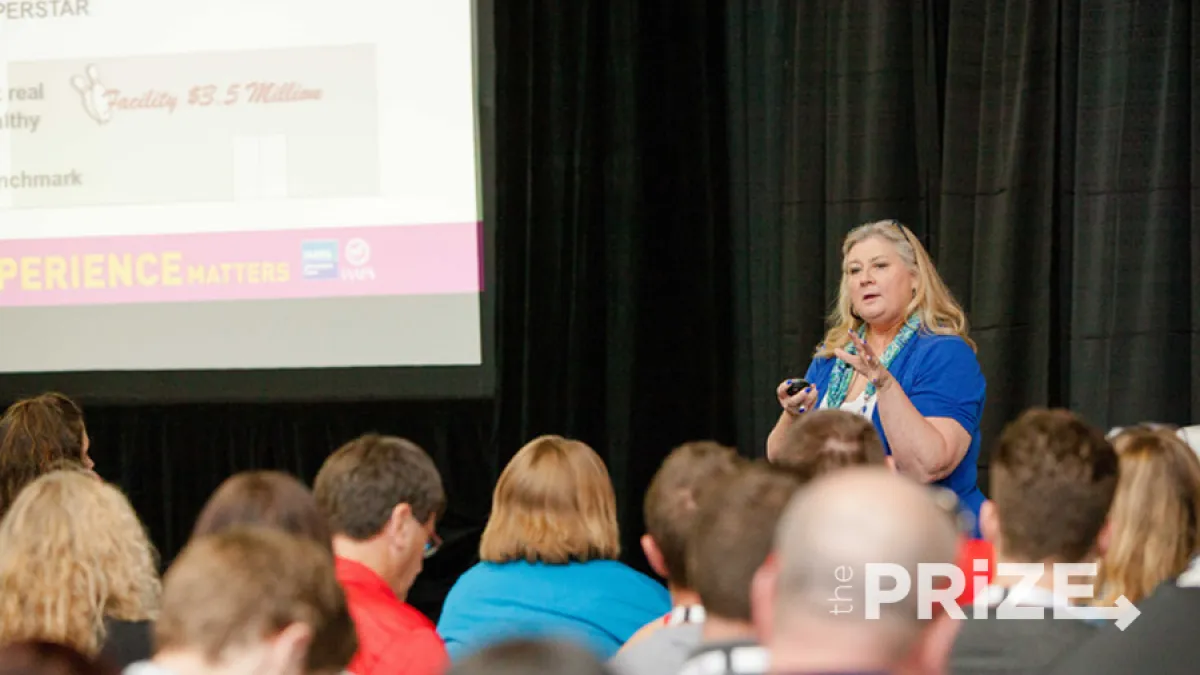
Editor's note: The PRIZE is excited to share key insights presented during an IAAPA EDUSession held at IAAPA FEC Summit 2026 in Phoenix. In this session, Beth Standlee and Kyle Allison shared how incremental changes can make impacts on family entertainment center profitability.
At many attractions, financial stability hinges less on dramatic changes and more on disciplined, incremental improvements. How can small operational adjustments—often just 1% shifts—significantly strengthen cash flow, profitability, and long-term resilience?
Allison—whose family owns the respected Altitude 1291—illustrates this concept with a year in which revenue dipped slightly, yet net operating income rose 5%. What led to the positive change? Tight expense control. This reinforces a core message that profitability is not only about making more money, but managing what is already in reserve.
Standlee cited published business author Michael Michalowicz’s “Profit First” method, which encourages sweeping a fixed percentage of deposits into reserve accounts twice monthly.
“I started doing that in 2016 … when 2020 got here, I had a pretty big nest egg,” says Standlee, founder and Chairwoman of TrainerTainment & The GrowthPro Group. This habit creates forced discipline and prevents overspending.
From there, a focus should also be on fiscal education—understanding P&Ls, cash flow statements, and balance sheets so managers can make informed decisions. The “Power of One” framework (most notably associated with Verne Harnish’s Scaling Up methodology) shows how a 1% change in price, volume, cost of goods, overhead, or inventory turns can meaningfully impact profit. For example, a 1% payroll reduction becomes tangible when framed as “How can we get 20 hours back?” rather than abstract percentages, explains Standlee.
Cost of goods has emerged as a major lever. Kyle’s business improved profitability by tightening food and beverage operations. Altitude 1291 adopted a limited lunch menu, reduced waste, lowered labor requirements, and simplied kitchen processes. These changes cascaded into savings across utilities, labor, and supplies.
Overhead control is another opportunity. Auditing unused software subscriptions, outdated services, excessive freight charges, and unnecessary storage can reveal thousands in avoidable expenses. Even small decisions—like eliminating a rarely used post office box—add up when applied consistently.
Inventory management also plays a role. Turning inventory even one day faster frees cash, while negotiating better vendor terms improves liquidity without sacrificing relationships. Paying bills on their due date—not immediately, not late—helps maintain trust while optimizing cash flow.
Finally, the pair touched upon pricing strategies. A 5% price increase across all items could generate more than $80,000 in additional cash flow, even if certain items require more nuanced adjustments. Volume sensitivity matters, but modest increases paired with targeted marketing or events can offset potential declines.
Overall, the message is clear: disciplined, educated management of small financial levers creates powerful, sustainable results.
Gain other expert insights at IAAPA FEC Summit 2027, Feb. 7-9 at JW Marriott Atlanta Buckhead. Click here to learn more.