


Funworld
Comment un duo d'entrepreneurs basé dans l'Oregon exploite les marchés locaux
Exploiter des mondes merveilleux
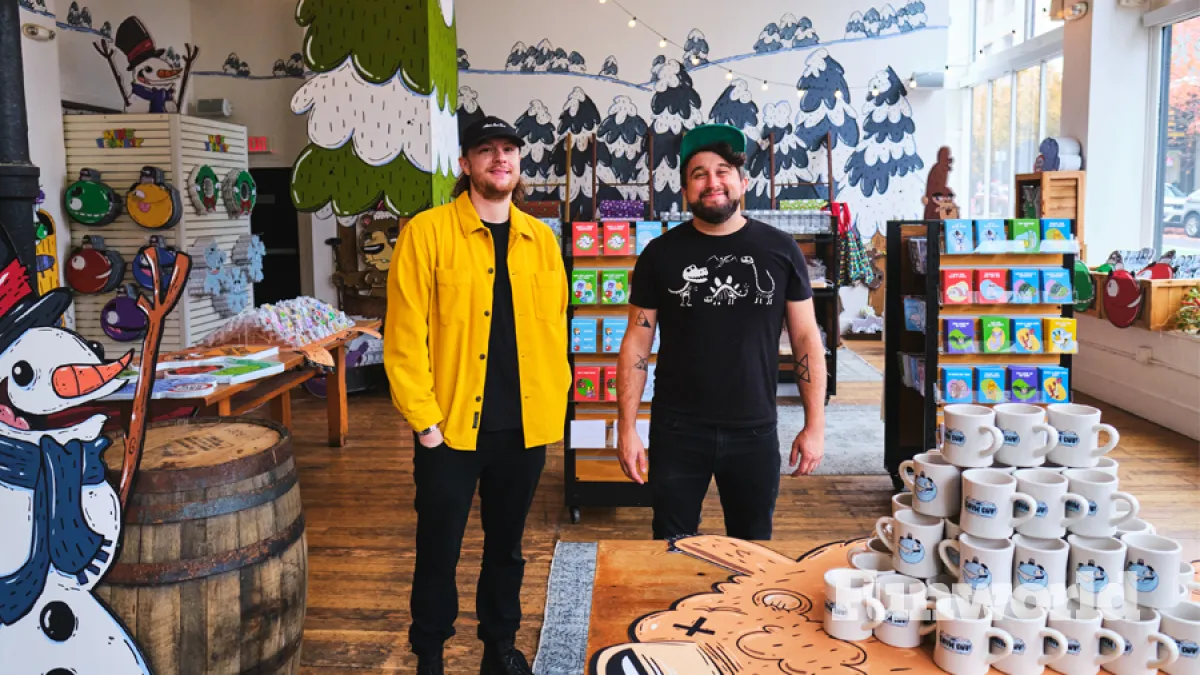
GÉRER UN CENTRE DE DIVERTISSEMENT FAMILIAL exige bien plus que de la créativité - cela nécessite une prise de décision opérationnelle constante dès le premier jour. L'ouverture des portes d'un établissement s'accompagne d'une longue liste de responsabilités et de considérations, allant de la dotation en personnel et de la programmation au flux de visiteurs et à la viabilité financière.
Quelles sont les priorités des futurs exploitants ? Funworld a posé la question à Teddy Albertson, cofondateur de Wonderwood Springs et Indoor Mini Golf, et à Mike Bennett, un artiste visuel qui se définit lui-même comme un "créateur de joie publique" et qui a fondé Wonderwood Springs et Indoor Mini Golf, l'Aquarium de Portland et Mike Bennett Studios.
Pour de nombreux entrepreneurs, le plus difficile est de créer un modèle qui fonctionne à la fois sur le plan opérationnel et sur le plan créatif. Pour M. Albertson, ces pressions n'étaient pas dissuasives : elles constituaient le cahier des charges. Fort d'une expérience dans l'hôtellerie et l'immobilier, Albertson a passé les trois dernières années à construire un nouveau type de modèle de divertissement familial aux côtés de Bennett - un modèle ancré dans la narration immersive, la flexibilité opérationnelle et un rôle délibéré de locataire complémentaire au sein d'écosystèmes de détail et de quartier plus vastes.

D'un café en difficulté à un point d'ancrage immersif
M. Albertson décrit le début de leur premier projet comme étant pratique. Il ne s'agissait pas d'un FEC, mais d'un café en difficulté dans le quartier St. Johns de Portland, qui avait besoin d'une nouvelle vie.
"J'ai une formation dans le domaine de l'hôtellerie et nous avions un café peu performant dans le quartier où Mike avait une expérience immersive adjacente", explique M. Albertson. j'ai contacté Mike et je lui ai dit : "Hé, tu veux venir ?"
En 45 jours environ, Bennett a transformé l'intérieur en utilisant des antiquités et du contreplaqué peint. Le résultat est Wonderwood Springs, un café médiéval fantastique peuplé des personnages originaux de Bennett - ses propres interprétations de licornes, de monstres, de fées et d'autres créatures fantastiques.
"Nous avons immédiatement constaté que l'entreprise était cinq fois plus performante qu'auparavant", explique M. Albertson. "Nous avons créé un véritable environnement de café immersif et basé sur une histoire
La nourriture, les boissons et la réalité de l'exploitation toute la journée
Wonderwood Springs est un café ouvert toute la journée, qui sert le petit-déjeuner, le déjeuner et le dîner. M. Albertson reconnaît que l'extension des heures d'ouverture de la restauration sur toute une journée - et l'offre de menus différents au fil de la journée - est souvent l'une des difficultés rencontrées par les concepts d'hôtellerie.
"Du point de vue de la restauration, [d'autres attractions] peuvent ne fonctionner qu'à l'une de ces périodes de repas et s'étendre à l'autre pour essayer de capitaliser sur les recettes", explique-t-il. "Vous pouvez venir à 10 heures pour un café et un bagel, ou à 19 heures pour un hamburger et une bière, et cela semble naturel." En outre, les menus ont été conçus pour être accessibles aux familles, tout en tenant compte des prix.
Gestion de la capacité
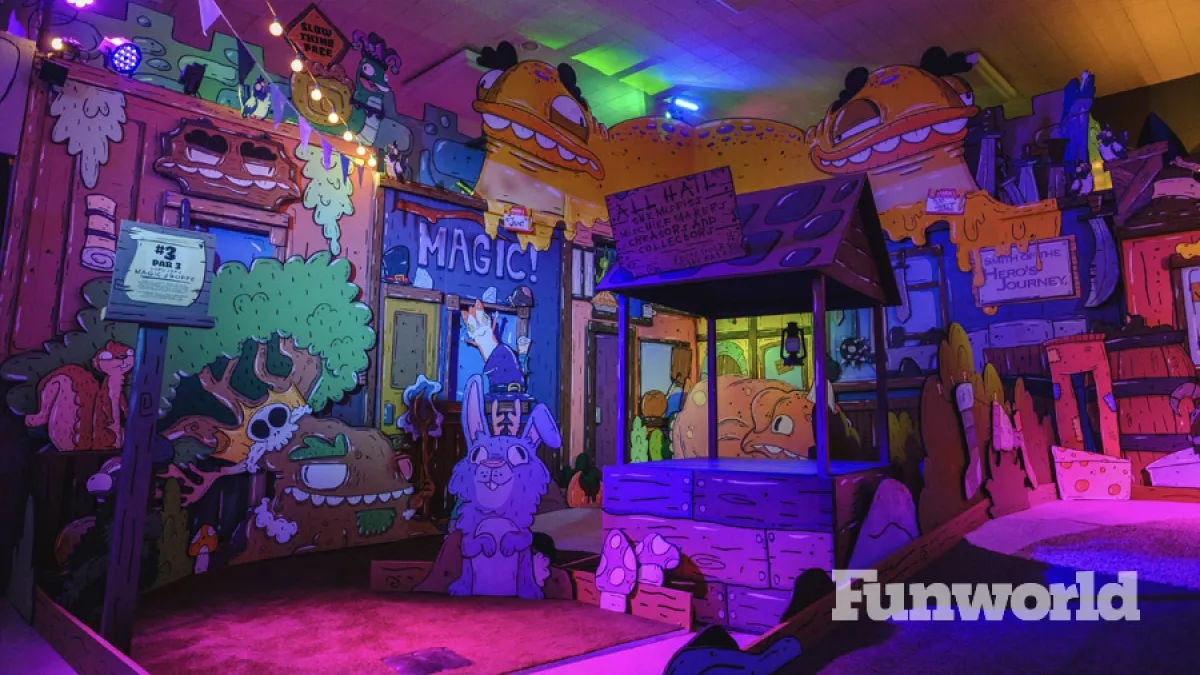
Contrairement aux attractions à accès direct, le mini-golf crée des goulots d'étranglement inévitables. Plutôt que d'obliger les visiteurs à faire la queue sur place pour leur expérience au mini-golf de Wonderwood, l'équipe a mis en place un système de liste d'attente numérique.
"Les gens peuvent s'empiler les uns sur les autres", explique M. Albertson. "Nous avons donc mis en place une liste d'attente numérique qui permet aux gens d'explorer le quartier et de se rendre dans les commerces environnants Il a rapidement constaté que la décision de mettre en place une liste d'attente virtuelle avait des répercussions positives au-delà des murs de Wonderwood.
"Nous avons constaté une augmentation de la fréquentation, non seulement chez nous, mais aussi dans tout le quartier", déclare-t-il. "Cela nous conforte dans l'idée que ces expériences fonctionnent mieux en tant que locataires complémentaires
Cette philosophie sera encore plus marquée dans le prochain projet de l'équipe : l'Aquarium de Portland.
Réécrire l'économie de l'aquarium
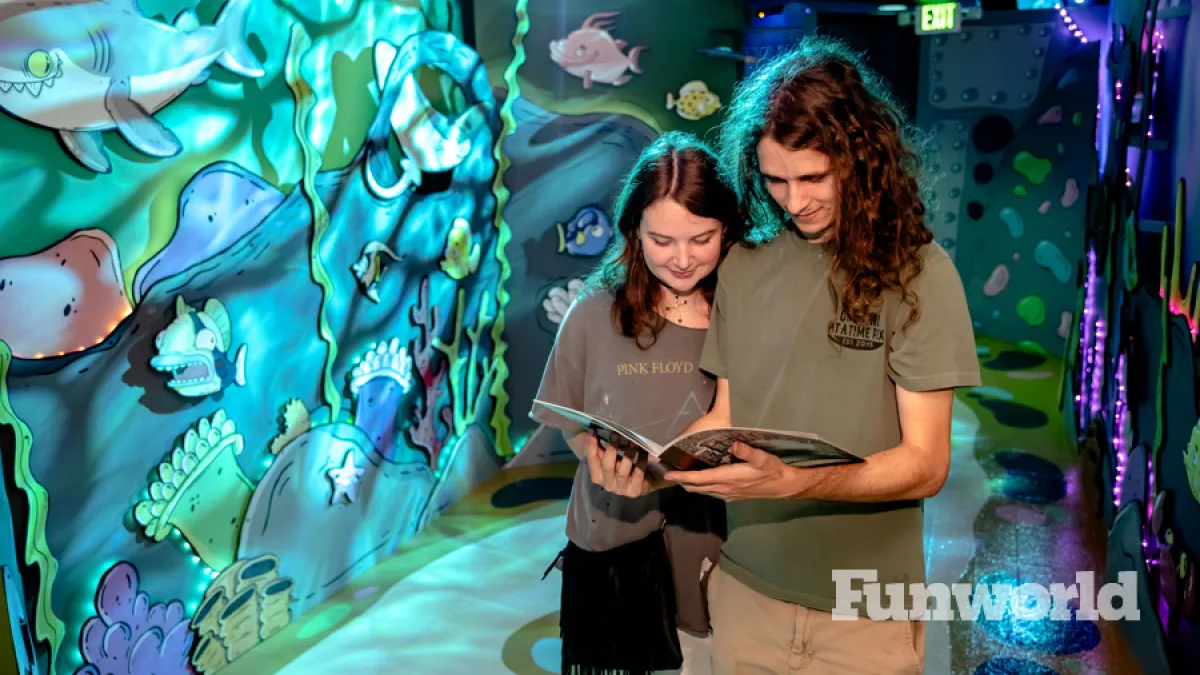
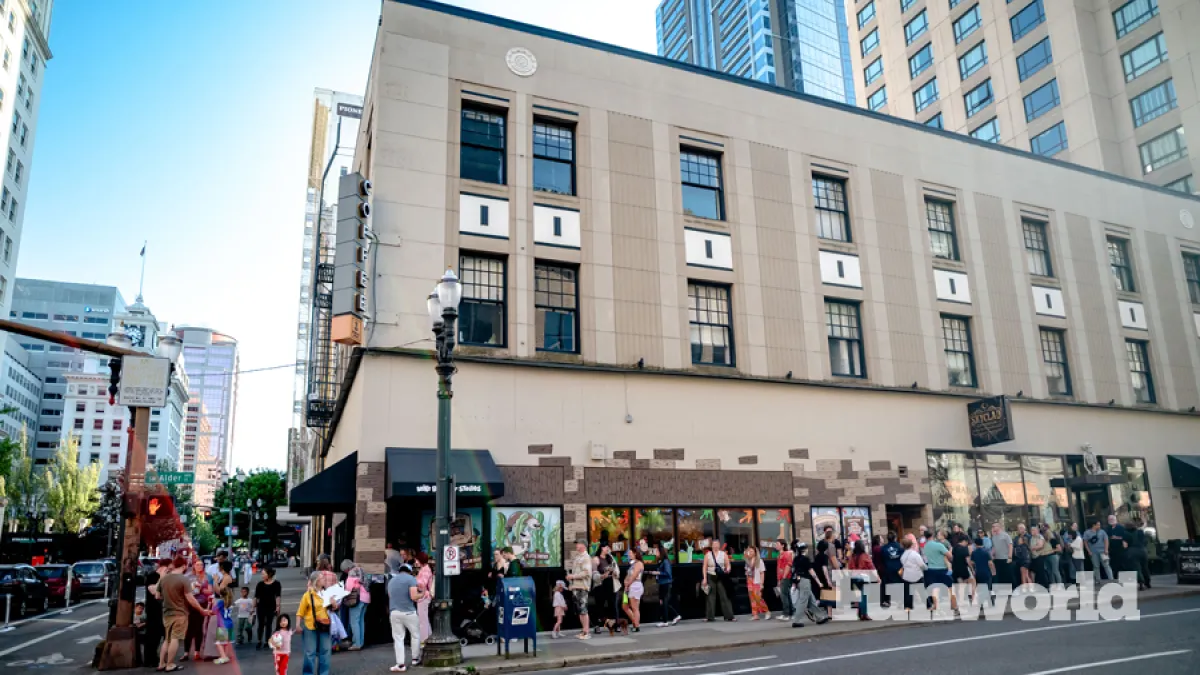
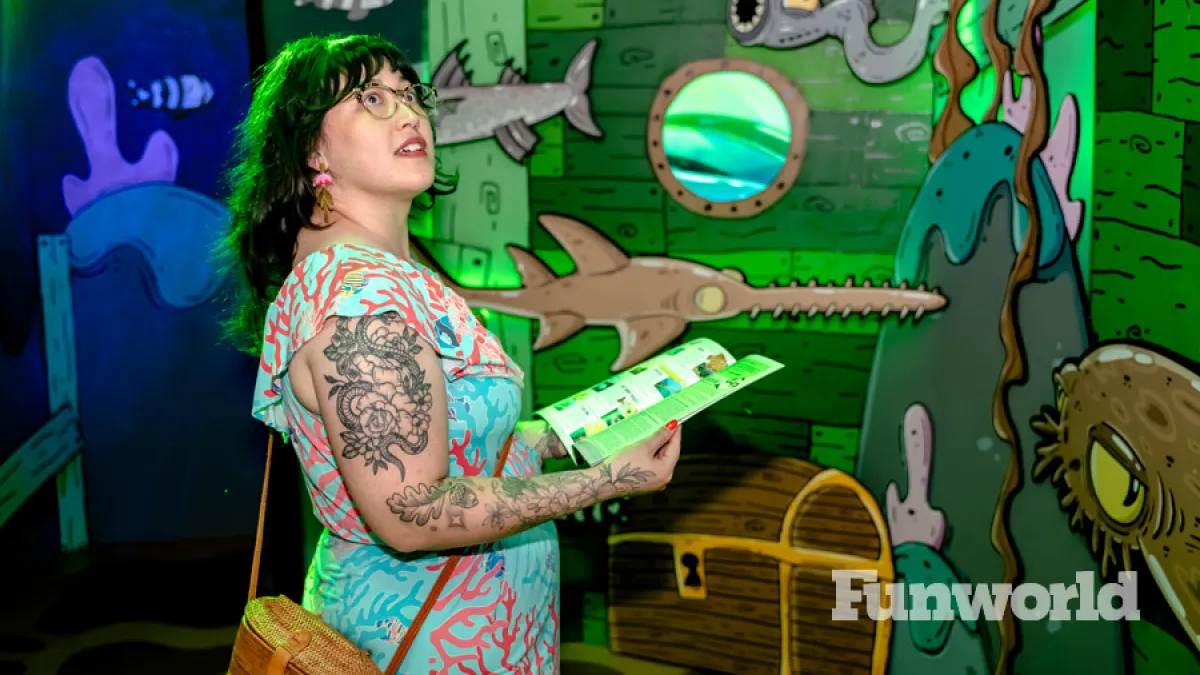
Situé dans un coin privilégié du centre-ville, l'aquarium de Portland n'occupe que 3 000 pieds carrés, une surface trop petite pour une installation traditionnelle d'animaux vivants. Au lieu de cela, l'attraction utilise des environnements illustrés et des récits immersifs pour présenter plus de 100 espèces, y compris des animaux tels que les baleines bleues et les requins-marteaux.
"La plus grande différence entre Wonderwood et l'aquarium est d'ordre économique", explique M. Albertson. "L'aquarium est uniquement axé sur la vente de billets et de produits de détail, sans nourriture ni boissons
Il ajoute que le centre-ville de Portland regorge déjà d'options de restauration populaires et qu'ils n'avaient pas l'intention de rivaliser pour obtenir ces dollars. "Nous voulions être un troisième espace qui complète ce qui existe déjà", ajoute M. Albertson.
Le format illustré modifie aussi radicalement les structures de coûts. "Une fois que le nombre de participants est suffisant pour couvrir les coûts fixes, les retombées sont très importantes une fois que le seuil de rentabilité est atteint", explique M. Albertson.
Bien qu'un petit nombre d'invités s'attende au départ à voir des animaux vivants, M. Albertson affirme que la réaction est extrêmement positive.
Un modèle évolutif pour les marchés suburbains
À l'avenir, M. Albertson estime que les marchés de niveau 2 et 3, c'est-à-dire les petites localités qui ne peuvent probablement pas accueillir un zoo ou un aquarium traditionnel, sont les plus prometteurs.
"Il y a tellement de villes qui n'auront jamais de zoo ou d'aquarium", déclare-t-il. "Mais les familles veulent toujours ces moments d'éducation et d'expérience
Comme le modèle ne repose pas sur des animaux vivants, l'installation peut s'adapter à des espaces allant de 3 000 à 20 000 pieds carrés, s'adaptant aux centres commerciaux, aux centres commerciaux extérieurs et aux commerces de centre-ville.
L'équipe a également lancé récemment un concept de podcast "zooquarium" destiné à enseigner aux enfants des faits sur les animaux terrestres et marins. "En combinant les éléments scientifiques et animaliers, nous avons découvert que cet espace offrait beaucoup plus de durabilité et d'opportunités à long terme. Les gens s'y reconnaissent", explique M. Albertson.
Le moteur de la création
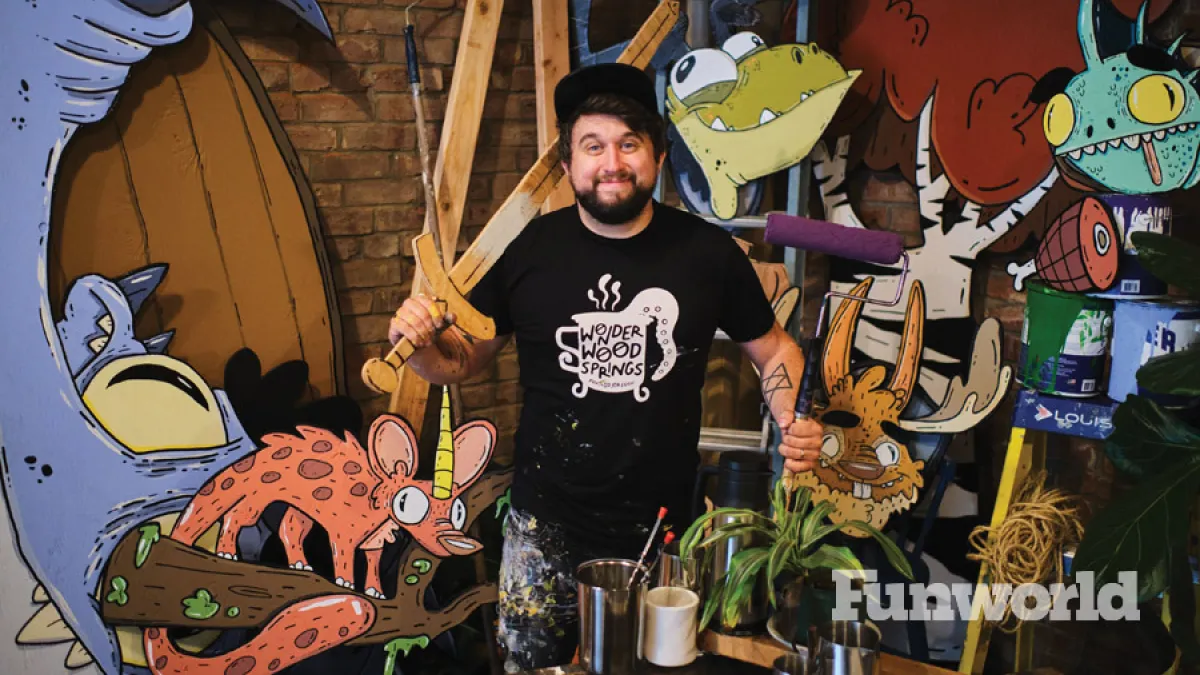
Alors qu'Albertson apporte son sens des affaires, Bennett est le noyau émotionnel et visuel de chaque expérience.
Ancienne enseignante en maternelle, Bennett apporte un état d'esprit d'éducatrice à la conception immersive.
"Les enfants veulent apprendre", explique-t-elle. "C'est quelque chose que nous oublions facilement. Mais j'ai une petite fille de 17 mois à la maison, et même aujourd'hui, elle apprend tout le temps et est très impliquée lorsque quelque chose de nouveau se produit."
Cette approche est particulièrement évidente au sein de l'Aquarium de Portland. "Nous pouvons parler de la façon dont nous pouvons ramener les loutres de mer sur la côte de l'Oregon ou de ce que nous pouvons faire pour prendre soin de nos côtes", explique Bennett, "mais il n'y a pas si longtemps, j'étais étudiante et je me souviens de ce que l'on ressentait quand on s'ennuyait. Je me souviens aussi très bien de ce que c'était que de se divertir tout en apprenant, et c'est ce dont je me souviens de l'école. J'essaie donc de m'en servir comme d'une étoile polaire
La valeur des villes incubatrices
Les deux fondateurs considèrent Portland comme un terrain d'essai idéal. "Cette ville fait vraiment du bon travail en adoptant des idées et en les adoptant", déclare M. Bennett. "On parle parfois de Portland comme d'une ville incubatrice. C'est de là que viennent beaucoup d'idées qui se développent ensuite à l'échelle mondiale
Pour M. Bennett, la transformation de bâtiments existants dans la ville qu'il habite depuis dix ans a du poids. "Transformer un grand magasin centenaire en un espace plein de joie est un honneur et une responsabilité", déclare-t-il. "Vous ajoutez de nouveaux souvenirs à un lieu qui en a accumulé des dizaines et des dizaines d'autres. Je pense que c'est vraiment génial d'avoir les clés de certains de ces espaces et de les transformer"
Le premier travail de Bennett a commencé chez lui. Il a créé une exposition intitulée "A to Zoo", qui consistait à installer chaque jour un nouvel animal dans son jardin pendant la pandémie. La nouvelle s'est rapidement répandue et le nombre de visiteurs est devenu incontrôlable. "À un moment donné, 1 000 personnes se sont présentées en une seule journée", raconte M. Bennett. "C'est à ce moment-là que j'ai su qu'elle devait vivre ailleurs
Communauté, marchandises et dynamisme
L'approvisionnement et le développement des produits dérivés se font en interne, directement à partir des personnages originaux de Bennett. Alors que les premières offres se concentraient sur de petits souvenirs traditionnels, la ligne s'étend aux jeux, aux peluches et aux produits éducatifs.
"Nous avons commencé à développer des jeux comme Go Fish, des peluches, des autocollants... Nous essayons également de nous concentrer davantage sur les produits éducatifs. Nous proposons des cartes de l'alphabet, des livres de coloriage - nous essayons vraiment de nous concentrer sur la combinaison de l'art et de l'éducation", explique Mme Albertson.
L'engagement communautaire est tout aussi central. Qu'il s'agisse de journées artistiques gratuites ou d'un événement de collecte de fonds au cours duquel le public a été invité à participer à la peinture du plus grand teckel du monde, l'équipe considère ses espaces comme étant plus que des attractions payantes.
"Nous avons organisé [l'événement du teckel] en tandem avec un fournisseur local de denrées alimentaires pour les personnes dans le besoin, afin de pallier l'interruption des prestations du SNAP. Nos meilleurs événements sont donc ceux qui intègrent le fait de rendre à la communauté ce qu'elle nous a donné ou de la soutenir", explique M. Albertson. En fait, nous créons simplement un espace communautaire ouvert centré sur la joie, la création et l'art, où les gens peuvent s'engager
L'avenir
Pour l'avenir, M. Albertson estime que la croissance dépendra de la capacité à trouver les bons partenaires immobiliers, c'est-à-dire ceux qui comprennent les locataires expérientiels. "Nous avons tout fait avec un budget très limité. Nous sommes entièrement autofinancés, donc nous avons fait les choses de manière très artisanale... mais en même temps, nous cherchons à trouver quelqu'un qui puisse voir la valeur que nous apportons. Il s'agit de le développer avec les bonnes personnes"
Suivez IAAPA pour des nouvelles et des annonces d'événements sur vos applications de médias sociaux préférées
Connectez-vous avec les histoires vraies qui se cachent derrière l'amusement
Suivez nos médias sociaux pour découvrir des histoires authentiques, des moments spéciaux et les coulisses du monde des attractions.


