

Tour button

Funworld

Powering the Education-to-Career Pipeline

02:41 PM • Par Lisa A. Beach

How innovative collaborations with colleges create pipelines for skilled, career-focused talent

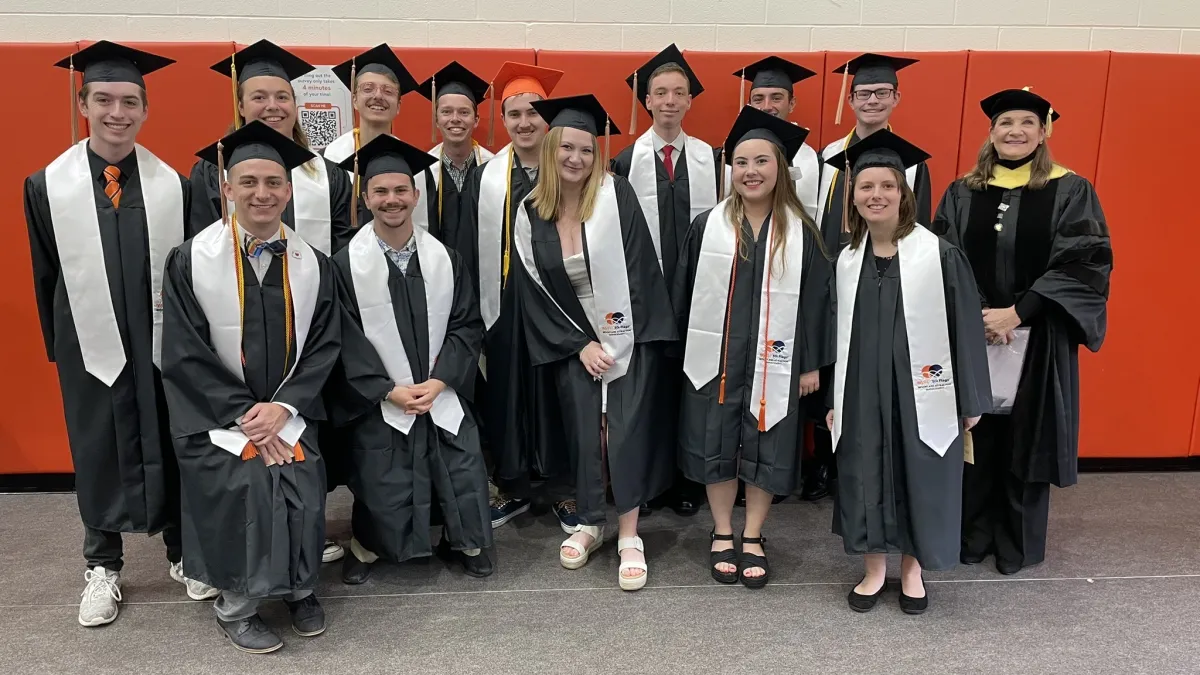
The faces of Bowling Green's Class of 2025 with caps and gowns on at graduation
With their caps and gowns, the spring 2025 graduating class of the Bowling Green State University Resort and Attraction Management (RAAM) program readies to walk across the stage to receive their diplomas.

IN SEASON AND OUT, attraction operators often face a stubborn challenge—finding skilled workers for year-round roles. Food and beverage supervisors, ride technicians, animal-care professionals, and assistant managers remain difficult to recruit, even as global forecasts suggest travel and tourism will need tens of millions more workers by 2035.

That’s pushing operators to rethink how they develop talent. Rather than relying on traditional hiring and short-term training, many turn to deeper partnerships with universities and technical colleges. David Mandt, recently retired executive vice president and chief governance officer at IAAPA, explains that the focus is “to help create the pipeline of talent for the future”—emphasizing year-round professional and skilled-trades positions.

The challenge isn’t just filling positions; it’s finding people with technical, operational, and guest service skills who want careers in the industry. IAAPA members point to gaps in several specialized roles—welders, ride control technicians, and food service supervisors. These technical positions, Mandt notes, “are probably the No. 1 areas members need.”

Awareness compounds the problem. Many jobseekers see only guest-facing roles without realizing there are hundreds of careers in the attractions industry, from veterinarians to water quality technicians. This article examines how three programs—a zoo-based college in Florida, a resort management degree in Ohio, and an engineering minor in the Netherlands—are aligning classroom learning with real operations.

Building the Pipeline

At the association level, IAAPA connects members and educators. The IAAPA Foundation supports students through three scholarship types: academic (tuition and fees), experiential (group visits to IAAPA Expo), and industry (sending professionals to standards meetings).

However, Mandt notes that scholarships are only half the equation. The other half is awareness—particularly among welding schools and trade programs that may not see attractions as a natural destination. The following programs show how awareness translates into action.

Training Keepers by Being Keepers

At Santa Fe College in Gainesville, Florida, workforce development starts inside a fully accredited zoo on campus. Launched in 1970, the Associate of Science in Zoo Animal Technology program operates through the Santa Fe College Teaching Zoo, an AZA-accredited facility run largely by students.

“The key feature is that the program itself is designed to train the next generation of animal care professionals, and it does that within its own zoo,” explains Jonathan Miot, who serves as zoo director and is also a professor. “The facilities that these students are learning in is a high-quality facility that has to do everything that every other zoo has to do. The difference is we do it with brand new animal care professionals.”

Over five semesters, students rotate through birds, reptiles, mammals, and ambassador animals while handling tours and education programs. The model removes the gap between theory and reality, allowing students to learn by being zookeepers. Graduates leave with hands-on experience in husbandry, safety, enrichment, and guest engagement—skills zoos struggle to teach on the job.

The results speak for themselves. Approximately 85% of graduates move directly into paid roles at zoos across the U.S. and abroad. “We have students leaving here and they’re going directly into working with big cats and great apes,” Miot notes. “These are some of the most advanced animals that you can work with.”

In-state tuition runs about $10,000 total for the two-year degree. In addition, Miot would like to develop scholarship partnerships where zoos sponsor local students who return as employees.

sfcollege.edu/academics/programs/3106.html

Co-Ops as a Management Pipeline

In Sandusky, Ohio, Bowling Green State University and Six Flags prepares students for leadership roles through a public-private partnership. The Six Flags Resort and Attraction Management (RAAM) program launched in 2020 and addresses what Swathi Ravichandran, professor and founding director, calls “a need for qualified labor in the growing attractions industry.”

The curriculum blends business and operations. “Our curriculum is a healthy mix of business courses, such as accounting/finance, law, marketing, HR, and strategic management, and operations courses, such as merchandise, lodging, food and beverage, and events and entertainment,” Ravichandran explains.

A core feature is the co-op structure: students complete two paid, six-month placements with Six Flags while progressing through coursework and earning certifications. “Our students are available to work full-time for six months at a time, which is very attractive to employers,” Ravichandran notes, giving operators time to move students through departments and identify where they’re most effective.

Jason McClure, regional general manager at Six Flags, values how the program develops “the ability to apply data findings and insights to operational scenarios,” which are critical for seasonal operations where quick decisions matter.

Accessibility is built in. The program offers in-person, online, and hybrid options with flexible pacing. BGSU and Six Flags provide stacked scholarships, and employers, offer tuition benefits for employees completing the degree online.

The evidence of the program’s success is strong: 91% of RAAM graduates accept or continue jobs six months after graduation.

bgsu.edu/academics/resort-and-attraction-management.html

Designing Coasters in the Classroom

At the University of Twente in the Netherlands, a 10-week minor in Roller Coaster Engineering gives engineering students a direct line into attraction design careers. Launched in 2024, the full-time program accepts approximately 30 students from different engineering and science backgrounds.

“The goal of RCE is twofold,” explains Dr. Jurnan Schilder, assistant professor and program director. “First, we want to provide motivated students with the opportunity to study the engineering of roller coasters and amusement rides. Second, we want to help the industry find engineering talents with a passion for roller coasters and amusement rides.”

Industry involvement is built into the structure. “The majority of the lectures are delivered by engineers from several roller coaster manufacturers,” Schilder says. “Each company has adopted one or more topics, and they are also involved in the assessment. This ensures that the knowledge we teach is accurate and relevant.”

Students work on a realistic project for a regional park—defining theme and capacity, producing a track layout that meets EN and ASTM safety standards, and designing support structures. Those projects double as a recruiting tool. Several participants have already secured internships and master’s projects with the manufacturers who teach in the program, Schilder notes, effectively turning the course into a talent scout for specialized engineering roles.

utwente.nl/en/et/ms3/education/roller-coaster-engineering

What Works in Academic Partnerships

Effective partnerships design around real jobs rather than abstract interest—Santa Fe students work zoo holidays, RAAM graduates read profit and loss statements, and Twente projects follow EN/ASTM standards that employers use.

Extended hands-on learning reduces both onboarding time and washout. Santa Fe’s five-semester immersion and RAAM’s six-month co-ops give employers confidence to invest in further training because graduates already know what the work entails.

RAAM’s online options, stacked scholarships, and employer partnerships—including tuition benefits from Herschend and Universal Orlando—directly lower barriers, while Santa Fe’s $10,000 in-state degree and potential zoo sponsorships make training affordable.

Finally, the strongest programs involve deep collaboration, not guest lectures. Manufacturers lead most Twente sessions; Six Flags codevelops RAAM metrics and adjusts placements; and Santa Fe’s advisory board continuously updates curriculum to match industry needs.

How Attractions Can Get Started

For operators without formal academic partnerships, experts recommend four steps:

Audit your local ecosystem. Identify nearby community colleges, universities, and technical schools, then initiate conversations about specific talent gaps and hiring volume.

Start small with career days, behind-the-scenes tours, or short co-ops to test fit and refine needs before launching full degree programs.

Explore funding models, such as scholarships or tuition benefits tied to return-of-service, similar to RAAM’s partnerships.

Commit to deep collaboration by developing curriculum, sharing operational data, and adjusting programs continuously rather than treating schools as vendors.

Attractions that treat academic partnerships as a core business strategy—rather than a nice-to-have—will be better positioned to build stable, skilled workforces in the decade ahead. 

Katie Pfingsten stepped into the executive director role for the IAAPA Foundation in January, alongside her work as IAAPA’s vice president, people and culture. As the executive director, Pfingsten is inspired by the Foundation’s commitment to workforce development, education, and expanding access, which she sees as vital to the future of our industry. Pfingsten’s background as an HR professional in the hospitality industry of over 15 years offers the perfect bridge to her new position. “I am energized by the opportunity to deepen our impact and continue serving our global attractions community in a meaningful way,” Pfingsten says.

meghan roth headshot

Meghan Roth, program manager for the IAAPA Foundation, leads the strategic planning, implementation, and evaluation of global workforce development initiatives. Since joining the Foundation in April 2025, she remained dedicated to inspiring the next generation of talent within the global attractions industry. Meghan brings more than a decade of diverse experience to her role, seamlessly blending expertise in program and event management with a background in nonprofit fundraising and community outreach. Her approach ensures the Foundation’s mission resonates with a global audience and fosters a sustainable pipeline for industry leadership.

headshot of lisa beach
Lisa A. Beach
Funworld Writer

Lisa is an Orlando freelance journalist, copywriter, and content marketing writer. Her work has appeared in The New York Times, Conde Nast Traveler, Islands, Parade, Good Housekeeping, USA Today, Costco Connection, and dozens more. Connect with her on LinkedIn.

Davantage de cet auteur

Pour les demandes de renseignements des médias ou de plus amples informations, veuillez visiter la Pressroom ou envoyer un courriel à [email protected]

IAAPA est la principale association mondiale de l'industrie des attractions, représentant les parcs à thème, les parcs aquatiques, les centres de divertissement familial, les zoos, les aquariums, etc. Dédiée à la croissance, à la sécurité et à l'innovation de l'industrie, l'IAAPA offre à ses membres des événements de classe mondiale, des ressources éducatives et des efforts de promotion. L'IAAPA met en relation les professionnels du monde entier, les aidant à créer des expériences d'invités percutantes et à assurer la réussite de leur entreprise. En savoir plus sur l'IAAPA

Connectez-vous avec les histoires vraies qui se cachent derrière l'amusement

Suivez nos médias sociaux pour découvrir des histoires authentiques, des moments spéciaux et les coulisses du monde des attractions.

awards
giant
dogs
celebration
winner
iaapa
girl