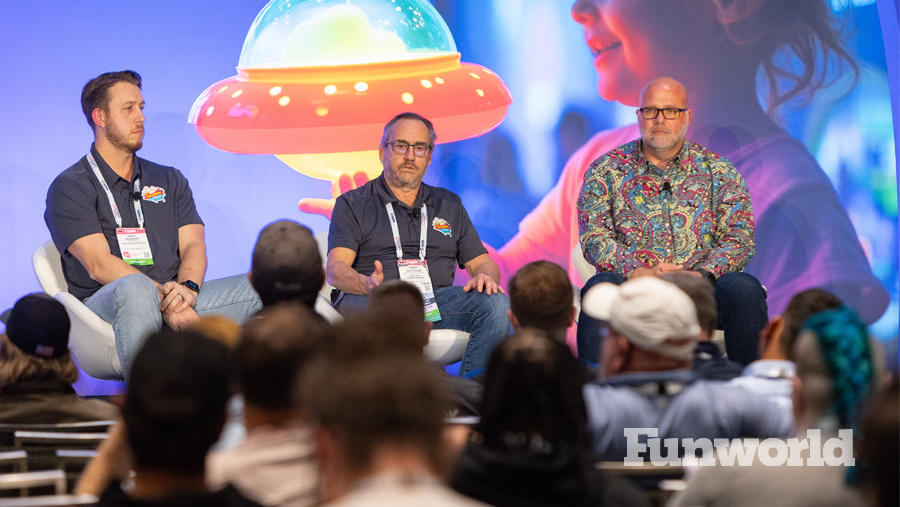



LE TRIAGE EST SOUVENT ASSOCIÉ AUX urgences médicales, mais ce concept s’applique tout autant aux exploitants de centres de loisirs familiaux qui évoluent dans des environnements complexes et au rythme effréné. Avec de multiples attractions, des rôles de personnel variés et des points de contact avec les visiteurs en constante évolution, même les problèmes mineurs peuvent rapidement s’aggraver s’ils ne sont pas traités à temps.
Adopter une approche fondée sur le triage permet aux exploitants d’identifier, de hiérarchiser et de résoudre les points sensibles de l’exploitation avant qu’ils ne s’aggravent. « Les centres de loisirs familiaux évoluent dans un environnement au rythme effréné, avec de nombreux éléments en mouvement et beaucoup de monde ; ainsi, l’accumulation des problèmes peut faire grimper les coûts », explique Nate Reinhart, propriétaire de The Upload Company. « Un cadre pratique de diagnostic, de traitement et de prévention peut garantir qu’un centre de loisirs familial prospère et ne se contente pas de survivre. »
Cette approche peut être décomposée en six étapes clés conçues pour aider les dirigeants de centres de loisirs familiaux à passer d’une résolution réactive des problèmes à une gestion proactive de la performance.
Esprit de triage
Un état d’esprit axé sur le triage aidera les exploitants à classer les problèmes en quatre catégories : urgent et important, urgent mais pas important, important mais pas urgent, et ni urgent ni important.
« Un jeu “important” est une attraction qui ne fonctionne pas bien ; un jeu “urgent” est l’un de vos jeux les plus performants qui ne fonctionne pas », explique Barry Zelickson, propriétaire de Next Exit Entertainment et vétéran du secteur depuis 35 ans. « L’état d’esprit de triage permet de déterminer où vous devez concentrer votre attention. »
Analyse des causes profondes
« Répondez-vous au problème réel ou vous contentez-vous d’y mettre un pansement, ce qui fait que le problème persiste ou s’aggrave ? », demande M. Zelickson. Une fois que vous avez identifié les causes profondes d’un problème, il est plus facile de le résoudre.
Par exemple, si les parents sont régulièrement frustrés par la disparition des animateurs lors des fêtes d’anniversaire pour enfants, la direction du lieu peut bien sûr demander à l’animateur de rester dans la salle. Cependant, cette approche n’est pas toujours efficace.
« Demandez à votre animateur de communiquer clairement ses attentes aux parents », explique Zelickson. « Donnez-leur le programme et indiquez-leur à quelle heure leur temps dans la salle prend fin. Dites à votre animateur que s’il doit quitter la salle, il doit prévenir les parents de l’heure à laquelle il reviendra. »
Intervention immédiate
Un jeu d’arcade très populaire peut illustrer cette étape. Zelickson prévient que les clients qui voient des jeux en panne sur la piste de jeu auront une impression négative du centre de loisirs familial (FEC). Les responsables doivent agir dès qu’un jeu en panne est signalé à l’établissement, et un plan doit être défini à partir de l’analyse des causes profondes effectuée par l’établissement.
« Si le jeu ne sera hors service qu’un jour ou deux, placez une affiche amusante sur la machine pour faire savoir aux clients que vous êtes au courant du problème », explique-t-il. « Mais si le jeu doit rester hors service pendant une semaine, retirez-le simplement de la salle de jeux. Tomber sur un jeu hors service est une expérience négative pour le client. »
Plans d’action
La planification des mesures consiste à élaborer une stratégie étape par étape pour des solutions durables. Par exemple, un four à pizza hors service est un véritable cauchemar lors d’un samedi très chargé, avec de nombreuses fêtes d’anniversaire. Il s’agit d’un problème urgent et important compte tenu du moment, mais l’établissement doit ensuite trouver un moyen de s’assurer que cela ne se reproduise plus.
« Il faut tenir le coup pour surmonter la situation, mais ensuite, analyser ce qui a bien fonctionné et ce qui n’a pas fonctionné, afin de pouvoir élaborer un plan d’action pour mieux gérer ce genre de situation la prochaine fois », explique Jeremy Hoyum, propriétaire des parcs Urban Air Trampoline and Adventure Parks. « Pour reprendre l’exemple du four à pizza, s’il s’agissait simplement d’un mauvais timing dû à l’usure d’une pièce, envisagez une maintenance préventive. »
Préparation à la croissance
Il est déjà assez difficile de maîtriser le fonctionnement d’un seul centre de loisirs familial (FEC), mais ces problèmes peuvent s’aggraver rapidement si les différents établissements détenus par l’entreprise ne sont pas préparés.
« Il est plus facile de gérer un problème et d’adopter une approche réactive lorsque l’on ne dispose que d’un seul établissement, mais dès lors que l’on en possède plusieurs, il faut être proactif », explique M. Hoyum. « Il faut à tout prix éviter que les fours à pizza tombent en panne dans tous vos établissements à cause de l’usure d’une même pièce. »
Évaluer et évoluer
Selon M. Zelickson, l’exploitation d’un centre de loisirs familial est un processus sans fin de suivi et d’apprentissage.
« Le secteur est en constante évolution, mais il existe des moyens simples de renouveler l’attrait de votre établissement », explique-t-il. « Cela peut être aussi simple que de réorganiser les jeux dans votre salle d’arcade ou de proposer un plat en édition limitée sur votre carte. Trouvez des éléments qui donnent aux clients l’impression que votre établissement est toujours nouveau et innovant. »