


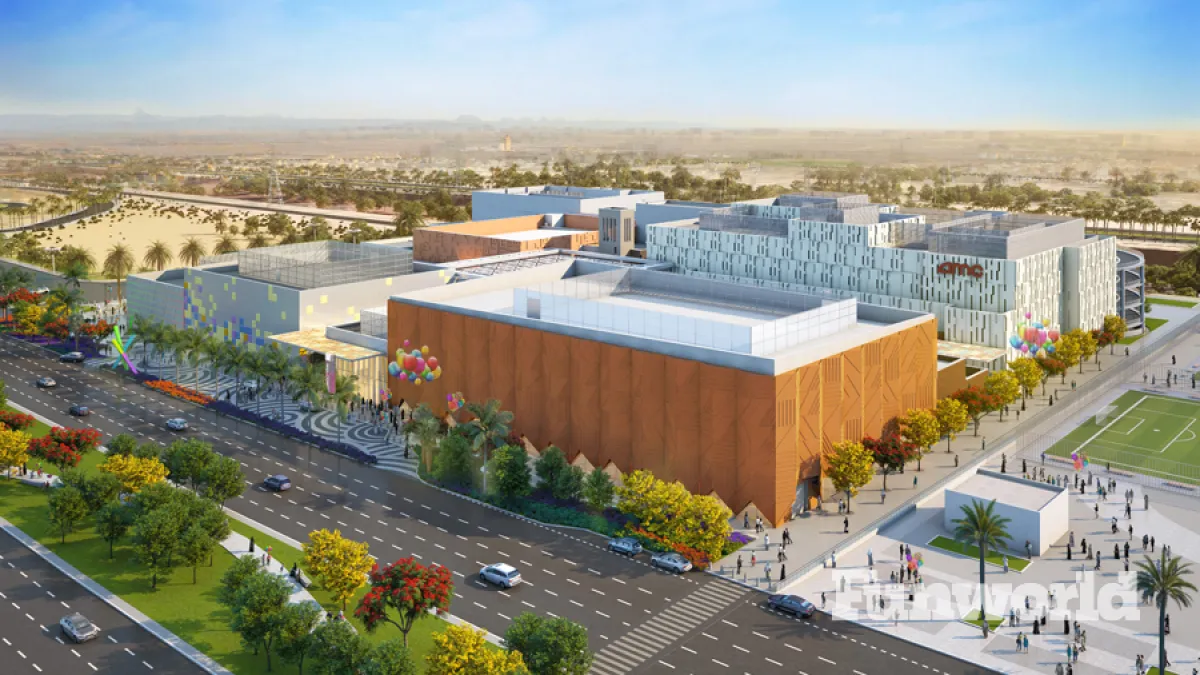
Across Saudi Arabia, hard hats and hi-vis vests have become the new uniform of ambition. Meanwhile, fresh recruits line up for group photos, while teaser trailers light up social media—heralding entertainment projects rising so fast they’re making seasoned developers’ heads spin.
Born out of the ambitious Vision 2030 roadmap to diversify Saudi Arabia’s economy, Saudi Entertainment Ventures (Seven), part of Qiddiya Investment Company, a Public Investment Fund (PIF) entity, is spearheading change. Seven Chief Entertainment Operations Officer Damien Latham opens up to Funworld about the thrills and pressures of leading through change. For Latham, the task is both exhilarating and daunting.
A Serious Business
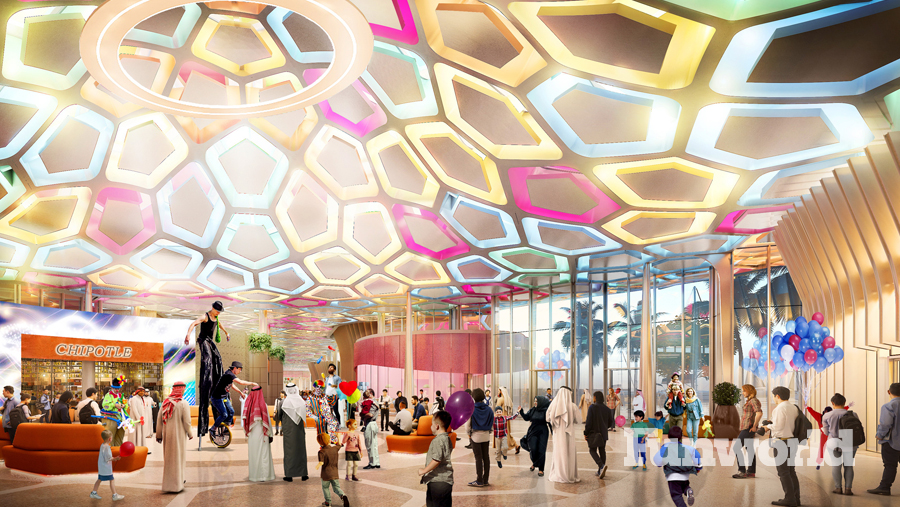
Seven simultaneously oversees the development and operation of 14 entertainment projects, representing an investment of more than SAR 50 billion. Seven’s bold place-making program will bring entertainment to cities throughout the kingdom, including Riyadh, Kharj, Makkah, Jeddah, Taif, Dammam, Khobar, Al Ahsa, Madinah, Yanbu, Abha, Jazan, Buraydah, and Tabuk. The goal is to create an integrated, interrelated, and sustainable leisure ecosystem across the country, including in cities that historically had few entertainment options.
“We are a community-based project that is excited about bringing new genres of entertainment to an emerging market,” Latham says. He explains the priority is to create destinations that connect authentically with Saudi families, deliver lasting value, and stand the test of time.
“We have a massive responsibility at Seven to spend wisely and to be sustainable,” he says. That sense of responsibility extends beyond budgets—it’s about earning the trust of a sophisticated audience. Saudi consumers are discerning and well-traveled, with an appetite for quality and innovation, which sets a high bar for any new venture, let alone a national network of venues. “Meeting those expectations is one of the things that keeps me up at night and keeps the team on their toes,” Latham says.
After years of planning, 2026 marks a crucial delivery phase. Seven aims to open five entertainment destinations this year. These entertainment hubs will be in Abha in the south, Tabuk in the north, Yanbu just north of Jeddah in the west, Madinah, and Al Hamra in Riyadh. The next wave of major openings will begin in 2027.
Championing a Diverse Attraction Mix
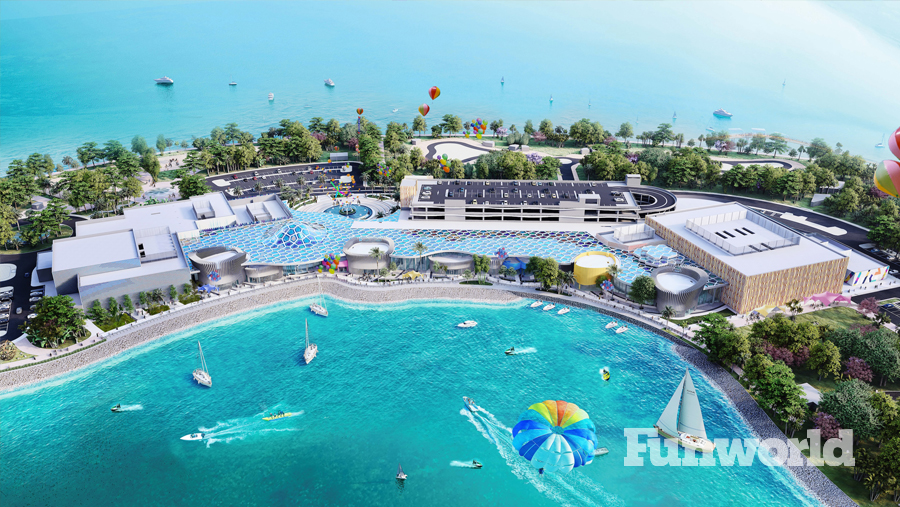
Latham, with three decades in leisure, including at Majid Al Futtaim and Center Parcs, joined Seven’s team of “Fungineers” six years ago at the project’s start. He recalls the intense “soul searching” and copious research that went into identifying what Saudi audiences might want from a new generation of entertainment experiences.
“You can look at the latest and greatest in attractions across the world, and that’s a great starting point,” he says. “But how do you know that’s going to resonate with the Saudi public, who are incredibly young, digitally savvy, and entertainment-hungry?”
Seven’s team recognized that success would depend on creating attractions that were unique, distinctive, and open to all, much like premier shopping malls. “We wanted to make our public spaces very entertainment-centric,” Latham says. The company conducted extensive market research across Saudi Arabia, gathering data and surveying public opinion. The team aimed to discover what facilities future guests would want—and how often they would visit. This in-depth study of more than 25,000 people of their consumer preferences led Seven to map out a list of attraction categories as a blueprint for projects. “We ended up with almost 25 different typologies, from karting centers to family entertainment centers, indoor ski slopes, water parks, aquariums, and everything in between,” Latham explains.
Family experiences were the foundation of each decision. Seven then began “carefully curating each of those attractions around the public realm to provide something for everyone,” Latham says. Food and beverage (F&B) facilities were also a key component, designed to encourage families to stay longer. Latham believes third-party leasing for F&B facilities will reduce the risk.
The business model scales depending on the location and population density. “You could end up with eight or nine different types of attractions in some of the smaller cities, and as many as 11 or 12 attractions in the larger cities,” he explains.
Investing in IPs
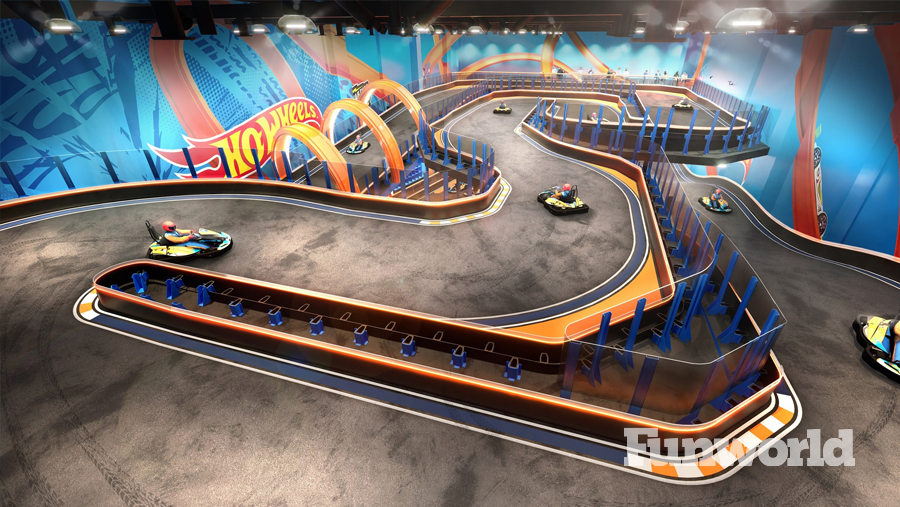
Seven is adding intellectual properties (IP) to the diverse attraction mix, combining big-name and original brands. The company has secured strategic partnerships with Hasbro, Mattel, Warner Bros. Discovery, and Formula E, with further IP collaborations likely. These agreements will deliver world firsts, including Transformers indoor entertainment centers, Play-Doh attractions, Formula E-branded indoor karting facilities, and Hot Wheels e-karting racing tracks.
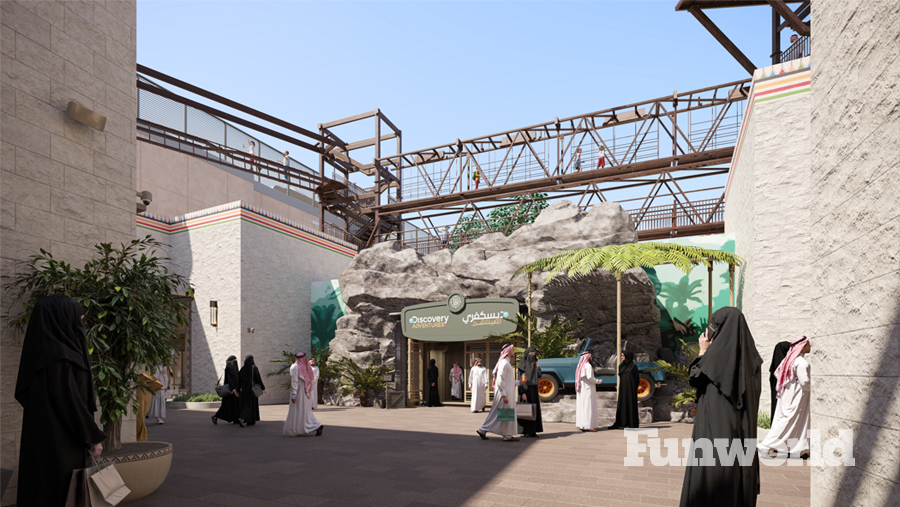
The Al Hamra entertainment destination in Riyadh, opening this year, shows the power of Seven’s planning in action. The SAR 3.6 billion, 168,000-square-meter entertainment cluster caters to a population near 9 million. Guests can expect to see 19 homegrown attractions and five global IPs. Attractions will include a Transformers experience, an indoor Discovery Adventures center inspired by Warner Bros. Discovery content, Formula E simulators, rides, a Flow House flow boarding venue from FlowRider, indoor skydiving, and experiential retail. There is also a cinema and an outdoor public space for events. Annual visits are projected to reach 15.6 million.
Seven will also introduce homegrown IPs. At Abha, a new family entertainment center brand will take its place alongside a Play-Doh Imagination Center, Formula E karting, a Discovery Adventures center, golf and bowling concepts, a cinema, a multipurpose venue, F&B outlets, and an outdoor public realm.
Latham calls the FEC a “cool environment” where “kids can come and play with a group of enchanted monsters in a fantasy forest.” Combining “fantastic-themed overlays” with story-driven attractions, the venue is more like “a miniature theme park” than a conventional FEC, he says.
Seven has shaped its attractions to appeal to Saudi sensibilities. Its surf-themed restaurants are a case in point. The project team looked at different surfing cultures from around the world before settling on a Hawaiian-style theme. “We said, ‘Well, how, how do we put a Saudi twist on that?’” Latham recalls. The answer lay within Jeddah’s architecture. The team incorporated the patterns, colors, and forms they had seen in Jeddah’s old town. “We fused the two genres beautifully,” he says.
Seven’s team is adopting the latest technologies to innovate, including artificial intelligence (AI). “We are using it, but we are using it carefully,” Latham says. “We’ve certainly used it in the ideation phase, but you can’t let a concept be driven totally by AI. The team views AI-powered pitches critically, ensuring the narratives—and promises—are genuinely deliverable. Hard-won experience and on-the-ground knowledge remain essential to optimize operations and the guest experience,” he believes.
Seven tracks global trends in entertainment, including the rise in immersive, gaming-based experiences. “Universal’s done a great job at recreating Super Mario Land [at Epic Universe]. I love what they’ve done there—you feel immersed in the game,” Latham says.
He sees more opportunities to bring themed attractions and gaming together to get players out of their bedrooms and basements. “It’s not just about recreating the land,” he explains, it’s about integrating technology, interactivity, and storytelling to bring those worlds to life.
“There are so many stories to tell and so many great ways to tell them,” he continues. Crafting experiences that resonate with audiences is an ongoing challenge. The key, he says, is to “convert those into repeatable businesses.” Companies must balance creative ambition with commercial pragmatism.
Laying the Groundwork for Lasting Growth
Seven strives to strike a balance between entertainment destinations that are distinctly Saudi while also appealing to international tourists. Given the incredibly fast pace of developments in Saudi Arabia, “we are constantly thinking about evolving what we’ve already designed,” he says.
Currently, the team is working through the huge logistical and operational challenges involved in opening locations throughout Saudi Arabia. Recruiting and training staff across multiple regions presents its own challenges. Seven is completing a comprehensive learning and development program to prepare team members fully. “We’ll continue iterating as we move forward,” he says.
Latham remembers the buzz of starting out in the leisure industry as a lifeguard at the launch of England’s Center Parcs Longleat Forest in 1994. He wants others to experience the same kind of excitement by helping to build an attractions industry that Saudis will aspire to work in. “That’s what success would look like,” he says.
Creating an entire entertainment ecosystem is a massive undertaking, and the team is approaching it with humility. “We’re not arrogant enough to think that everything’s going to hit a home run,” Latham says. “When you are breaking new ground, when you are testing new attractions, there will be a degree of learning.”
He outlines an ambitious target—within the next three to four years—once most of its curated destinations are open. Seven aims for an 80-85% success rate across its attractions. “That would be an amazing achievement,” he says. For now, Seven is focusing on bringing to life entertainment experiences that set a new benchmark for entertainment in Saudi Arabia and the world beyond.