


The “6-7” trend serves as a cautionary tale for FEC operators.
The trend—where members of Gen Alpha and teens repeatedly say “six-seven” out loud, often in a sing-song voice, largely without any literal meaning—caught fire and became mainstream. A savvy operator may have purchased plush toys, stickers, and T-shirts to stock crane machines and redemption prizes adorned with the 6-7 branding. But what goes up, must come down. Operators who jumped on the trend may now have boxes taking up space in the backroom.
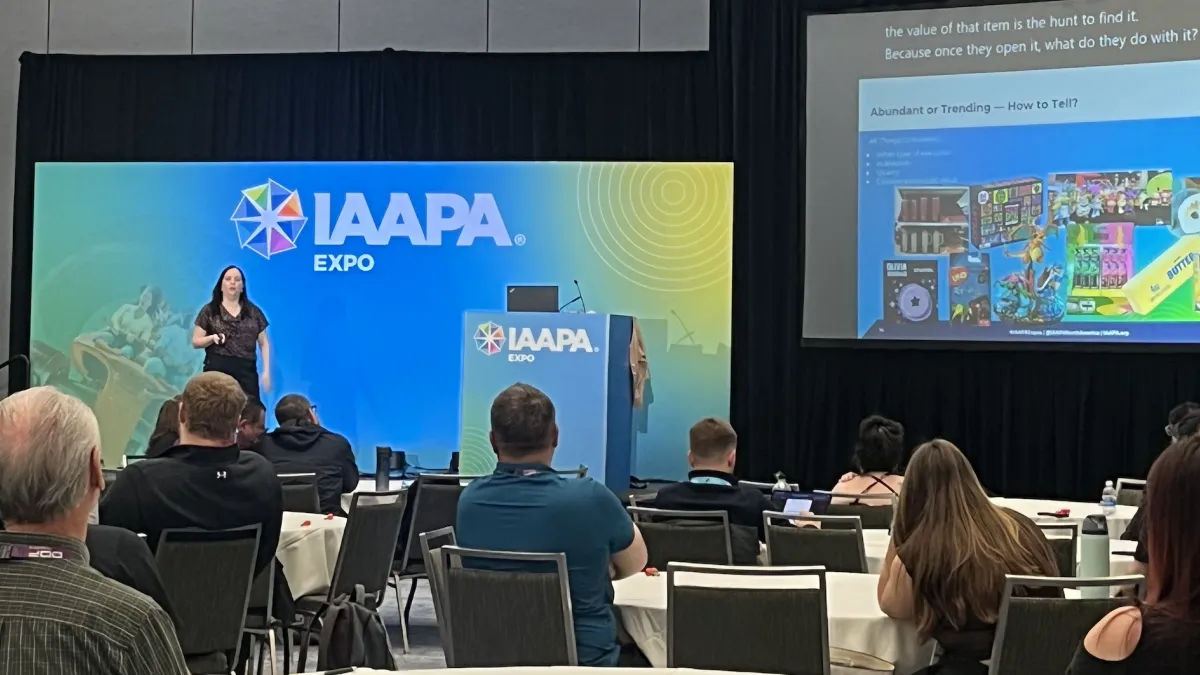
“For three weeks, we couldn’t escape it. Now if you say it, your kid will say it’s not cool anymore,” says Lisa Price, senior vice president of merchandise at Family Entertainment Group. “When ‘6-7’ became popular, it was everywhere, and then people tried too hard to get it out and make money off it.” Price is responsible for overall procurement, budget management, and new item creation across more than 100 different FECs. She spoke at an EDUSession at IAAPA Expo 2026 in Orlando, where more than100 attendees learned best practices to predict consumer demand, along with when and how they could integrate new trends.
Trending Items vs. Evergreen Merchandise
Price says that a good balance of your stock and purchasing should be around 75% evergreen items and 25% chasing trends. For evergreens, going with tried-and-true items, such as plush, novelties, and candies, is a tried-and-true strategy. Operators can also supplement that with brands that have staying power, including Mario and Hello Kitty.
While operators can increase their profit margins by taking advantage of deals like quantity discounts and free shipping for their base items, trends require careful execution to make money.
“Structure an evergreen core before you go trend hunting,” Price shares.
How to Identify and Take Advantage of Trends
Doing a little research can go a long way in determining a trend strategy. Price advises going to trendy brick-and-mortar stores to look at what designs are on shirts, what jewelry items are on the shelves, and what is placed near checkout. Any items that repeat are worth noting.
“You can also watch videos on YouTube or TikTok without even leaving your house,” notes Price, “but social moments, while explosive, have a shorter shelf life.”
Once a trend is identified, determine the timing to make sure to be ahead of the curve. Price says that once the market becomes saturated—warning signs include toys in fast food meals and third-party licensing on everyday items like soap—the trend is being pushed too hard, and those who are interested in being trendy will move on to something else.
Price prefers to look for a style or theme rather than focusing on a brand. A style or theme allows for generic merchandise to be purchased in the shape or color palette of the trending item to increase staying power.
“Navigate exclusivity by minimizing the risk,” says Price. “When you can’t get Punch the Monkey, you can get generic monkeys to fill your cases.”
She says this mindset gives the items operators purchase the best shot of making it out the door instead of being the next “6-7.”
“Never sacrifice your core budget to chase a trend,” Price concludes.