


Article
Programming the Seasonal Experience Calendar in Attractions
How to builds anticipation and sustain engagement during shoulder seasons
Flowers in the spring, pumpkins and haunts in the fall, and Santa Claus with an abundance of snowflakes in the winter are all hallmarks of seasonal entertainment.
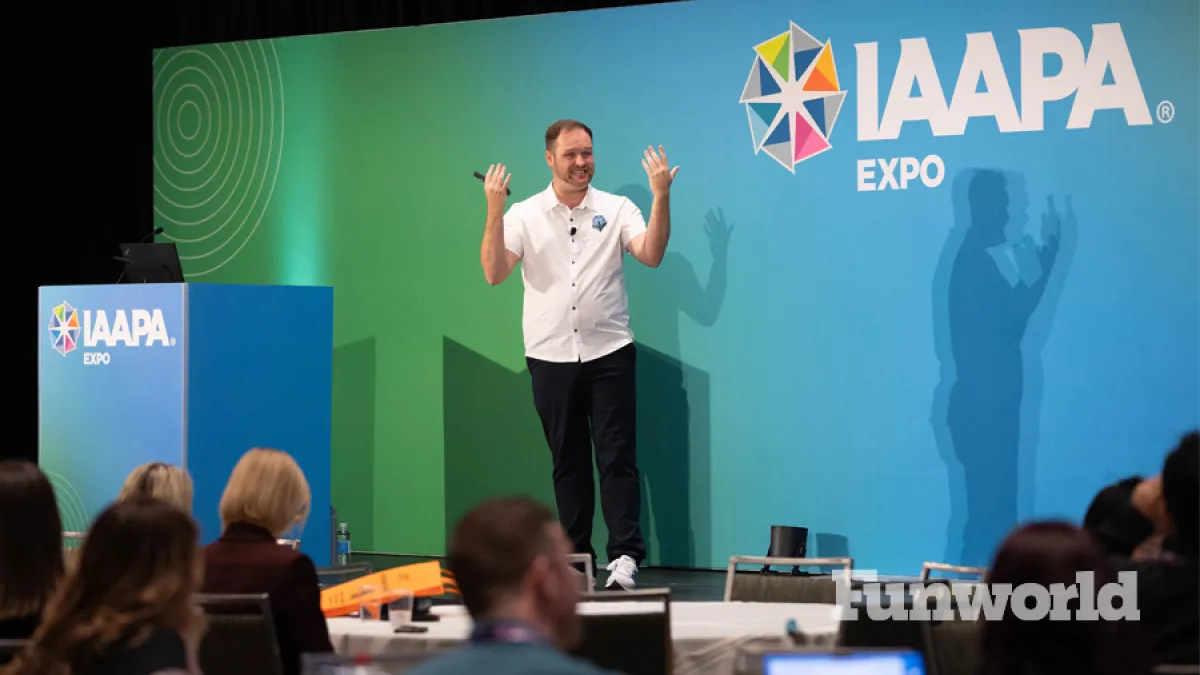
These tentpole events are essential for driving seasonal demand at many attractions. But what about the rest of the calendar year? Ryan Allen, lead at Little Birdie Consulting, led an EDUSession at IAAPA 2026 that challenges attractions to round out experience calendars in unique and compelling ways.
While each attraction will approach this challenge differently, Allen stresses the importance of finding opportunities to bring guests in to engage with creatively and meet the facility’s financial goals.
“Events have to have a purpose,” says Allen. “The purpose of that spring event is traditionally to get guests in the park and get them to spend money, to get them to activate their season passes. It’s covered in flowers, [but] that’s what, in my experience, that spring tentpole is.”
Beyond those traditionally popular seasons that many attractions likely already capitalize on, numerous gaps exist in the calendar year where real opportunity can be found.
How does an attraction identify where to fill the calendar with more programming? To find the gaps worth pursuing, Allen asks operators to identify when more quest volume could actually be supported. “Do you connect with your marketing team? Spoiler alert—you should. They’re going to have data for you in ways you do not have.”
Once a gap is identified and it’s time to build a new festival, it must be easy to understand in order to be a success. Drawing from his own professional experience, Allen cites Carowinds’ State Line Celebration as a festival that did not immediately catch on as its prior iteration, the Great Carolina Fest. Complex menu items and less than ideal June heat were two contributing factors to the festival lasting only one year.
On the flip side, its next iteration, State Line Celebration, had menus that were easier to understand and was an overall simpler experience. “We made sure that we were telling a story that guests could engage with quickly,” Allen shares.
Other ways to optimize a festival include understanding the factors working against it—often elements like weather, which Allen faced at Carowinds. Operating hours and school calendars can offer clues on how to meet guests where they’re at. A summer festival, for example, may perform better in the evening hours, when temperatures are cool.
This philosophy also includes meeting guests where they are physically. Allen notes that a first-year festival could do better in an area of the park that already receives a higher volume of foot traffic. While festivals have the potential to bring guests to “dead zones,” that move could be reserved until after the festival is a proven success.
When the inaugural festival kicks off, Allen stresses the importance of patience in waiting for success. Now-popular theme park festivals like Epcot’s Food and Wine Festival and Knott’s Berry Farm’s Boysenberry Festival are proven models for the staying power of seasonal festivals, but neither were at the size and scope that they are now in year one. With patience, however, Allen argues that a strong three or four-year plan could yield year-round anticipation and engagement with an audience.

تابع IAAPA للحصول على الأخبار وإعلانات الفعاليات في تطبيقات الوسائط الاجتماعية المفضلة لديك
تواصل مع القصص الحقيقية وراء المتعة
تابع وسائل التواصل الاجتماعي الخاصة بنا للحصول على قصص حقيقية ولحظات مميزة وإطلالات من وراء الكواليس من عالم الجذب السياحي.


